 Pin it
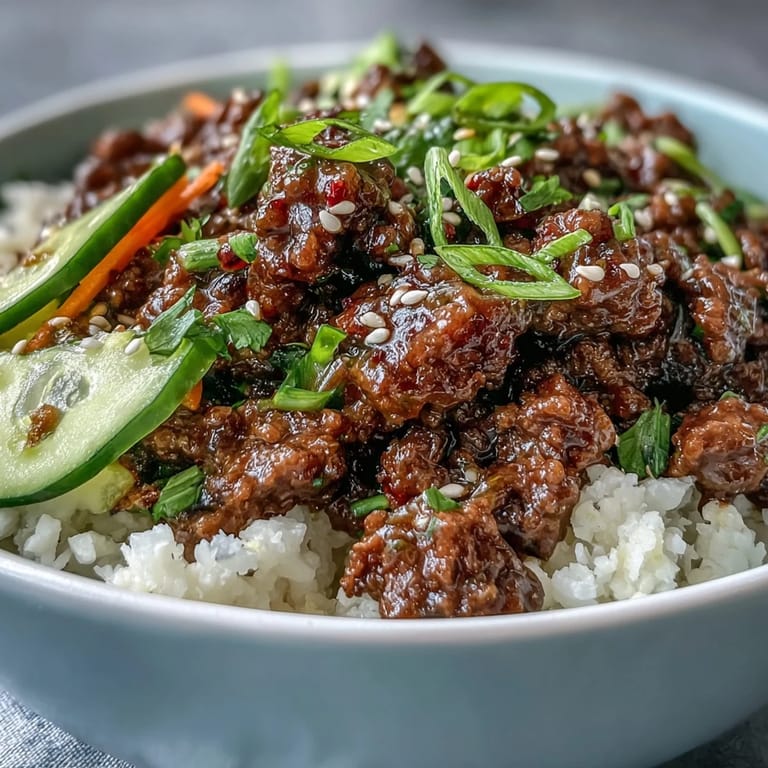
 My friend texted me at 4 PM asking what's for dinner, and I realized I had ground beef thawing and absolutely nothing planned. Twenty minutes later, we were sitting on her kitchen counter with these gorgeous bowls in front of us, and she asked for the recipe before even finishing her first bite. That's when I knew this Korean-inspired bowl had become something special—simple enough for a weeknight scramble, but complex enough to feel like you've put in real effort.
I made this for my family last month, and my dad—who is extremely particular about his food—asked me to make it again the very next week. My mom started keeping the ingredients stocked, which is her way of saying she's genuinely impressed. Watching them quietly devour their bowls without much chatter told me everything I needed to know.
Ingredients
- Lean ground beef (500 g): Look for meat that's bright red and doesn't have excess moisture pooling at the bottom of the package, as this affects how nicely it browns and caramelizes in the pan.
- Soy sauce (2 tablespoons): Use tamari if you need it gluten-free, and if you only have regular soy sauce on hand, it works just as well—just know your final dish won't be certified gluten-free.
- Toasted sesame oil (1 tablespoon): This is non-negotiable; regular sesame oil tastes completely different and won't give you that rich, nutty depth that makes this bowl sing.
- Brown sugar (1 tablespoon): It balances the savory and salty elements perfectly, but if you only have white sugar, use it without worry—the flavor difference is minimal.
- Fresh ginger (2 teaspoons grated): Grate it right before cooking rather than using pre-minced; the difference in brightness and aroma is honestly striking.
- Garlic (3 cloves minced): Three cloves gives you flavor without overwhelming the dish, but if garlic is your thing, go ahead and add more—this recipe is forgiving.
- Gochujang (1 teaspoon optional): If you can find it at your grocery store or any Asian market, it adds authentic heat and depth, but sriracha works beautifully if that's what you have.
- Green onions (2 sliced): These provide freshness at the end, so don't skip them or add them too early or they'll wilt into the sauce.
- Sesame seeds (1 tablespoon): Toast them lightly in a dry pan if you have time; they taste exponentially better than raw ones straight from the jar.
- Jasmine or cauliflower rice (4 cups cooked): Jasmine rice is fluffier and more forgiving, while cauliflower rice gives you a lower-carb option that's surprisingly satisfying.
- Rice vinegar (1/2 cup): The pickling liquid's backbone—it's milder than regular vinegar, so your vegetables stay crisp rather than becoming mush.
- Carrots, cucumber, radish (julienned and sliced): Cut them uniformly so they pickle evenly; thinner slices mean faster pickling and better texture in the final bowl.
Tired of Takeout? 🥡
Get 10 meals you can make faster than delivery arrives. Seriously.
One email. No spam. Unsubscribe anytime.
Instructions
- Start the pickles first:
- In a bowl, stir together rice vinegar, sugar, and salt until the sugar completely dissolves—you'll hear it stop being grainy when you stir. Add your julienned carrots, sliced cucumber, and radish, toss everything together, and let it sit while you handle the rest; 15 minutes minimum, but honestly, longer is better here.
- Get your rice ready:
- Follow your rice package instructions and keep it warm in a covered pot or rice cooker while everything else comes together. If you're using cauliflower rice, it only needs about 5 minutes in a hot skillet with a splash of sesame oil.
- Brown the beef properly:
- Heat a large skillet over medium-high heat and add your ground beef, breaking it apart with a spoon as it cooks—don't just stir it around, actually work it apart so you get those lovely browned bits instead of gray, steamed meat. This takes about 5 to 7 minutes, and you'll know it's ready when there's no pink left and the meat is actively sizzling.
- Build the sauce:
- Pour off excess fat if there's more than a thin film pooling in the pan, then add soy sauce, sesame oil, brown sugar, ginger, garlic, and gochujang if using. Stir everything together and let it cook for 2 to 3 minutes until the sauce becomes glossy and clings to the beef and your kitchen smells absolutely incredible.
- Finish with brightness:
- Remove from heat and stir in your sliced green onions and sesame seeds—the heat will slightly soften the green onions while keeping them crisp enough to provide that fresh contrast. Taste it here; if you want more salt or sesame flavor, now's the moment to adjust.
- Compose your bowls:
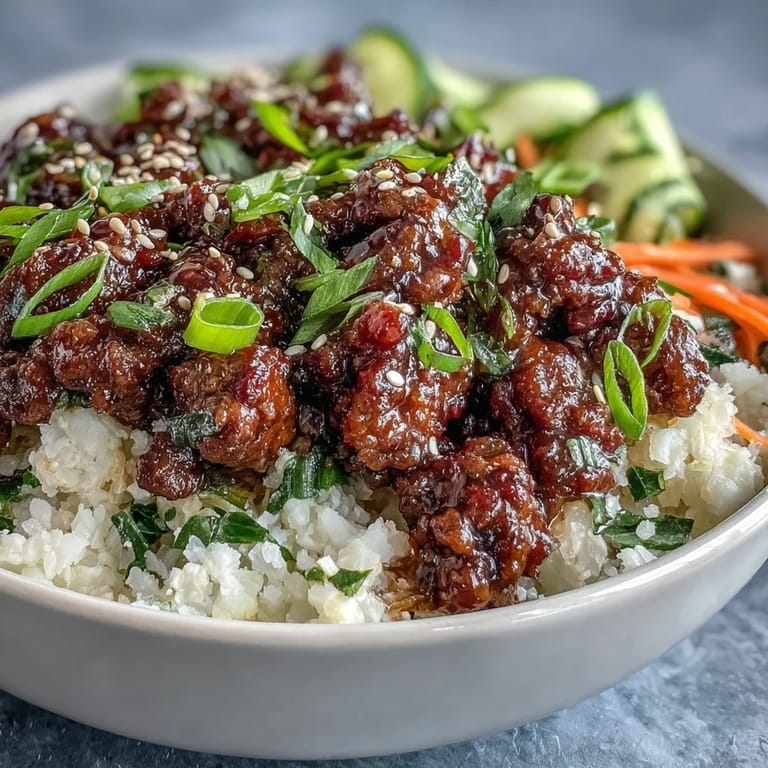
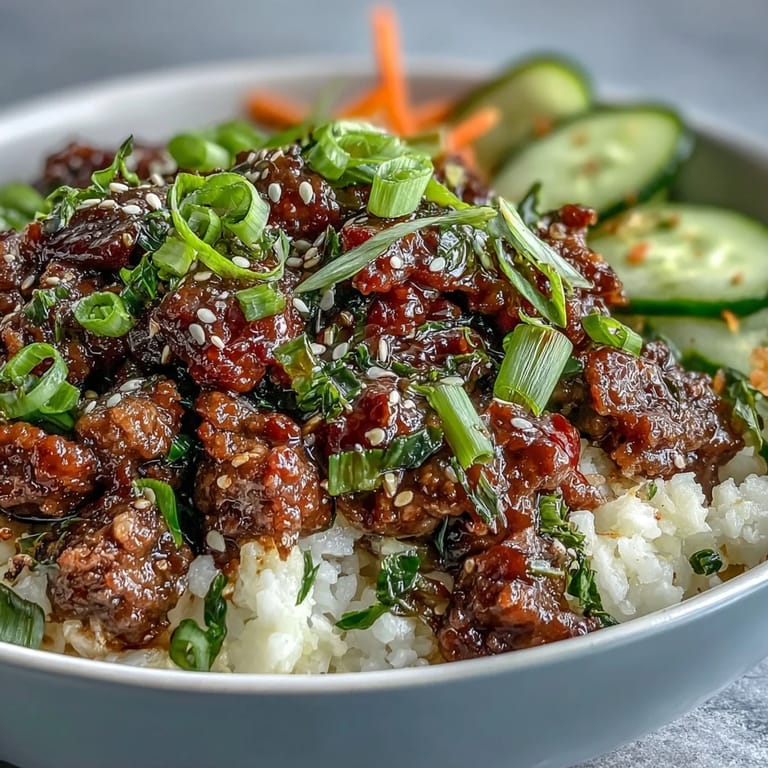
- Divide your warm rice among bowls, pile the beef in the center, and top with a generous handful of those pickled vegetables—and generous really means it, because those tangy bites are what make this dish feel balanced and complete. Garnish with extra green onions and sesame seeds, then serve immediately while the rice is still warm.
 Pin it
 My neighbor came over while I was eating this, caught one whiff of the sesame and ginger, and asked if she could sit down for five minutes. She ended up staying for twenty, and we had this lovely conversation about food memories and what makes us feel taken care of. That's when I realized this bowl does something beyond just nourishing you—it creates a moment.
Making It Work for Your Dietary Needs
The beauty of this bowl is how naturally it adapts to different diets without feeling like you're sacrificing flavor. Use cauliflower rice instead of jasmine, and suddenly it's low-carb without tasting like deprivation. Swap ground turkey or chicken for beef if you prefer lighter protein, and the seasonings are robust enough that you won't notice the difference in satisfaction. For vegetarians, crumbled tofu or tempeh absorb the sauce beautifully—just make sure to press your tofu first so it actually drinks in the flavor rather than staying bland.
The Pickle Power
Those quick pickled vegetables are honestly where this recipe separates itself from just being seasoned ground beef over rice. The acid cuts through the richness of the meat and sesame oil, and the crispness provides texture contrast that keeps your palate interested through every bite. I learned this the hard way by making the bowl without them once—it was fine, but it was also forgettable. With the pickles, it becomes the kind of meal you think about days later and want to make again.
Timing and Assembly Wisdom
This is one of those recipes where mise en place—having everything prepped and ready—actually matters because everything moves quickly once you start cooking. The beef cooks fast, the sauce comes together in minutes, and if your rice isn't ready, you'll be standing there with hot meat waiting for rice to steam. I now prep my vegetables while the rice cooks, start the pickles first thing, and then focus entirely on the beef sauté.
- Set your pickled vegetables going before anything else so they have maximum time to soften and soak up flavor.
- If you're cooking for a crowd, you can make the beef and rice ahead and reheat gently just before serving.
- The sesame seeds and green onions are toppings meant to go on right before eating, so save those for assembly rather than mixing them in early.
 Pin it
 This bowl has become my go-to when I want something that feels special but doesn't require hours in the kitchen or a shopping list as long as my arm. It's the kind of meal that makes people ask for the recipe, which means it does exactly what good food should do.
Recipe FAQs
- → Can I make this bowl gluten-free?
Yes, simply substitute regular soy sauce with tamari and verify that your gochujang label confirms it's gluten-free. The remaining ingredients are naturally gluten-free.
- → How long do the pickled vegetables last?
Quick pickled vegetables will keep in the refrigerator for up to one week in an airtight container. The flavors continue to develop over time, making them even more tangy and delicious.
- → What protein alternatives work well?
Ground turkey or chicken make excellent lighter substitutions. For a vegetarian version, crumbled firm tofu or tempeh absorbs the seasonings beautifully while providing protein and texture.
- → Is cauliflower rice a good substitute?
Absolutely. Cauliflower rice creates a low-carb version that still provides a base for the seasoned beef. It cooks quickly and absorbs some of the savory sauce while keeping the dish lighter.
- → Can I meal prep these bowls?
These bowls meal prep excellently. Store components separately in airtight containers—the seasoned beef, cooked rice, and pickled vegetables keep for 4-5 days. Reheat the beef and rice, then assemble fresh.
- → What adds more heat to the dish?
Increase the gochujang or add sriracha to the beef while cooking. You can also serve with kimchi on the side or sprinkle red pepper flakes over the finished bowl for extra spice.