 Pin it
 There's something about the first warm day of spring that makes me crave bright, fresh food, and tabbouleh was the answer I kept coming back to. I discovered this bowl years ago at a neighbor's potluck, watching her arrange jewel-toned tomatoes and emerald parsley with such ease that I assumed it was complicated until she laughed and said it takes minutes. The magic isn't in technique but in the quality of what you're using and the simplicity of letting those flavors speak for themselves.
I've made this for potlucks where it disappears before half the other dishes get touched, and I've made it for quiet weeknight dinners when I wanted something that tastes restaurant-quality but doesn't demand much from me. One time I brought it to a picnic and someone asked if I'd bought it from a Lebanese restaurant—that moment stuck with me because it proved how good simple, fresh ingredients can be.
Ingredients
- Fine bulgur wheat: The foundation of the dish, and using fine bulgur matters because it absorbs water quickly and has a tender bite that chunky bulgur can't match.
- Boiling water and sea salt: The salt isn't just seasoning; it seasons the grain as it hydrates, so the wheat has flavor from the start.
- Ripe tomatoes, diced: This is where quality shows immediately—use the best tomatoes you can find, preferably in season, because underripe tomatoes will make the whole bowl taste flat.
- English cucumber, diced: English cucumbers have fewer seeds and thinner skin, so they stay crisp and add refreshing texture without getting watery.
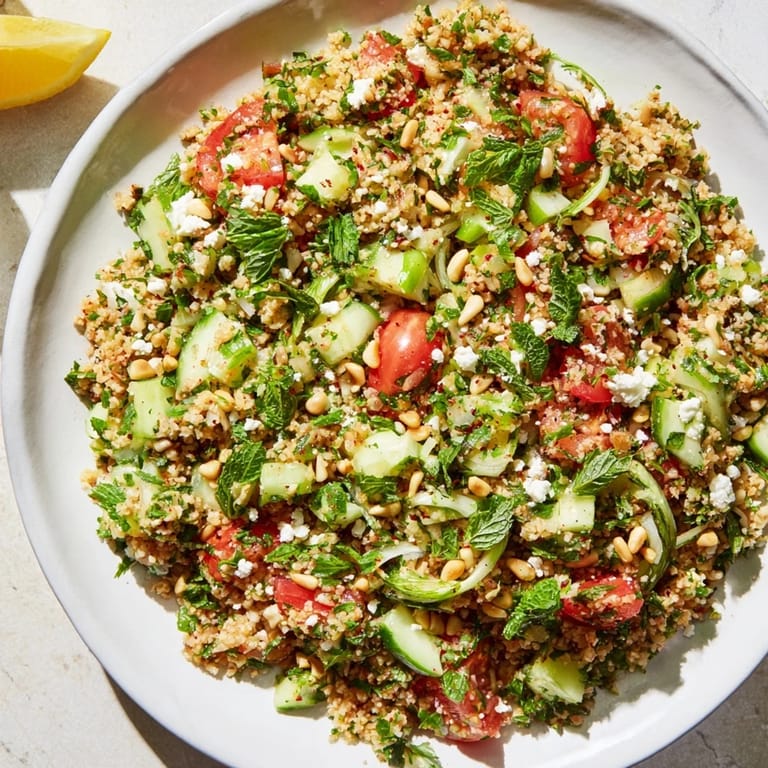
- Fresh flat-leaf parsley and mint, finely chopped: These herbs are the heart of tabbouleh, not just a garnish—don't skimp on quantity or use dried herbs as a substitute.
- Scallions, thinly sliced: They add a gentle onion bite that keeps the bowl from feeling one-dimensional.
- Extra virgin olive oil: This dresses the entire bowl, so use one you actually enjoy eating, not just cooking with.
- Fresh lemon juice: Bottled juice won't give you the same brightness; squeeze it fresh just before mixing.
- Garlic and black pepper: Just enough to add depth without overpowering the herbaceous freshness.
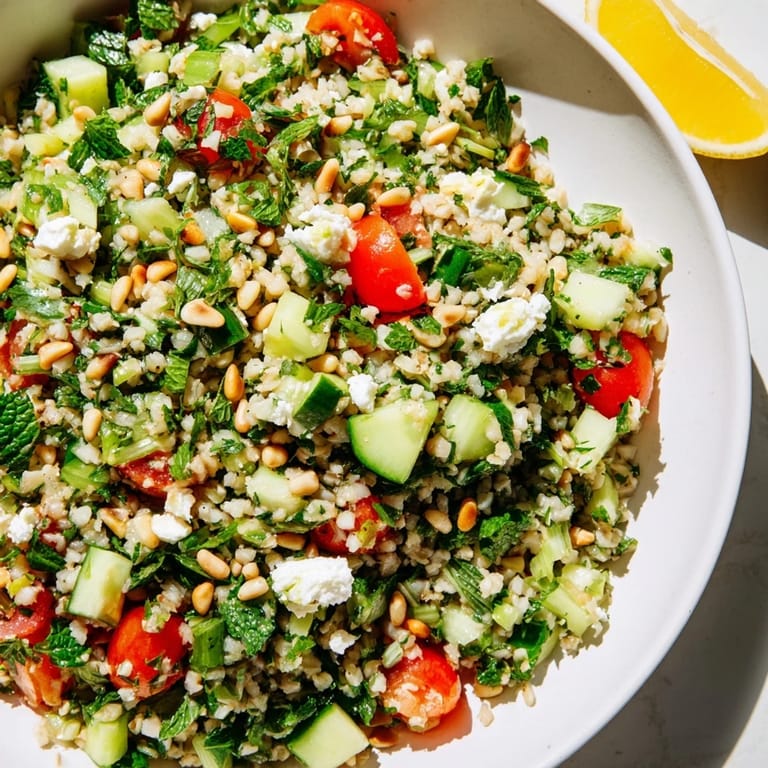
- Optional feta and pine nuts: These are luxuries that add texture and richness, but the bowl is stunning without them too.
Tired of Takeout? 🥡
Get 10 meals you can make faster than delivery arrives. Seriously.
One email. No spam. Unsubscribe anytime.
Instructions
- Hydrate the bulgur:
- Pour boiling water over the bulgur and salt in a large bowl, cover it, and let it sit for 10 minutes—you'll watch the grains soften and plump up as the water gets absorbed. Fluff it with a fork once the water is gone, then spread it on a plate or leave it in the bowl so it cools to room temperature; warm bulgur will wilt the fresh herbs.
- Make the dressing:
- Whisk together olive oil, lemon juice, minced garlic, and black pepper in a small bowl, tasting as you go to make sure the lemon and olive oil are balanced the way you like them. This dressing is simple enough that you'll notice every ingredient, so don't rush it.
- Combine the vegetables and herbs:
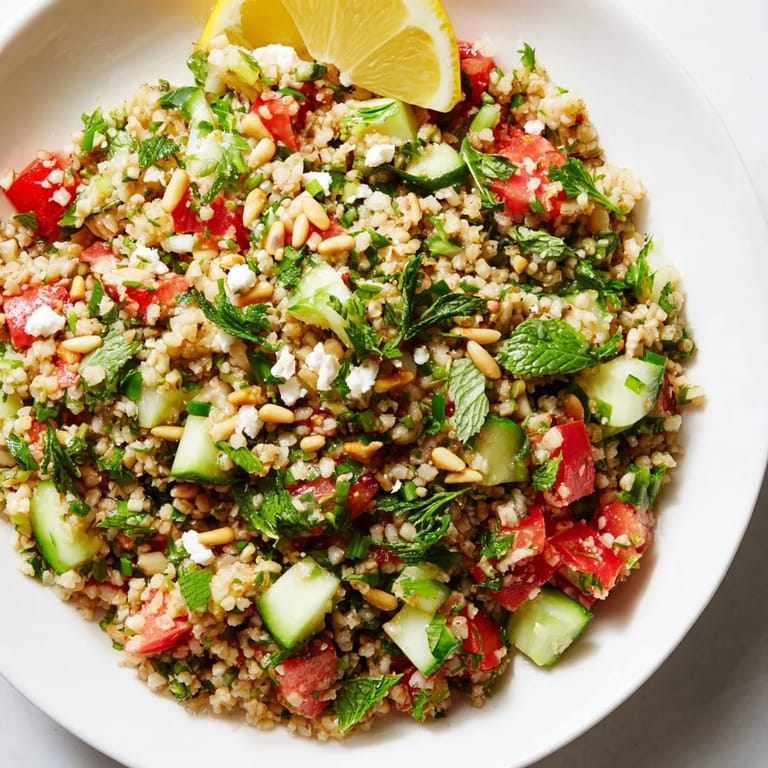
- Once the bulgur is cool, add the tomatoes, cucumber, parsley, mint, and scallions, folding everything together gently so you don't bruise the herbs. The mixture should look bright and green, not brown.
- Dress the bowl:
- Pour the dressing over everything and toss thoroughly until every grain and vegetable piece is coated—this is where the flavors start to marry. If it looks a little dry, trust it; the tomatoes will release juice as it sits.
- Taste and adjust:
- This is the moment to taste and decide if it needs more salt, lemon, or olive oil—everyone's palate is different, and the seasoning should feel right to you. A quick chill in the fridge for 10 minutes helps the flavors blend, but it's delicious right away too.
- Serve:
- Spoon it into bowls and top with feta cheese, toasted pine nuts, and a lemon wedge if you like—or keep it simple and let the colors speak for themselves.
 Pin it
 I once made this for someone who said they don't usually eat salad, and watching them go back for thirds was the kind of small victory that reminds me why I cook. That's when food stops being about following a recipe and becomes something you want to share.
Why This Bowl Became My Go-To
The beauty of tabbouleh is that it doesn't require a stove or any real cooking skills, just sharp knives and fresh ingredients. I make it in summer when my tomatoes are at their peak, but also in winter when I need something that tastes alive and bright. It's forgiving enough for weeknight meals and special enough to serve at a table of people you want to impress.
Variations That Work
Once you've made this a few times, you'll start seeing it as a template rather than a strict formula. I've added roasted chickpeas for protein, swapped quinoa for bulgur when I wanted gluten-free, and thrown in diced bell peppers or radishes when I had them on hand. Some versions get a pinch of sumac for tartness, others get a splash more olive oil because that's how you like it.
Serving and Storage
This bowl is best served at room temperature or slightly chilled, which makes it perfect for meal prep and picnics. I've found that it keeps well for up to two days in the fridge, though the herbs soften slightly and the flavors meld even more, which some people prefer. If you're making it ahead, dress it just before serving so it stays bright and the bulgur doesn't get mushy.
- Store it in an airtight container and give it a gentle stir before serving.
- If it dries out a bit in the fridge, add a squeeze of fresh lemon juice and a drizzle of olive oil to revive it.
- Pack it for lunch in a jar with the dressing on the side if you're traveling, or mix it all together if you're eating it within an hour or two.
 Pin it
 This is a recipe that teaches you something every time you make it, whether it's about the power of fresh herbs or how much a squeeze of good lemon can transform simple vegetables. It's the kind of dish that belongs on your table more often.
Recipe FAQs
- → What grain is used as the base in this dish?
Fine bulgur wheat is soaked in boiling water until tender, forming the hearty base for this bowl.
- → How is the dressing prepared?
The dressing combines extra virgin olive oil, freshly squeezed lemon juice, minced garlic, and ground black pepper whisked together for a zesty finish.
- → Can I substitute any ingredients for dietary needs?
Yes, use cooked quinoa instead of bulgur to make it gluten-free. Omitting feta and pine nuts also adapts the dish for allergies.
- → What herbs are included in this grain bowl?
Fresh parsley, mint leaves, and scallions are finely chopped and mixed throughout to give vibrant herbaceous notes.
- → How long does it take to prepare this dish?
Total preparation time is about 30 minutes, including soaking bulgur and assembling ingredients.
- → How should this dish be served for best flavor?
Serve chilled or at room temperature, topped with optional feta, toasted pine nuts, and a lemon wedge to brighten the taste.