 Pin it
 The first time I made zaatar focaccia, I was standing in my kitchen on a gray afternoon, holding a tin of zaatar that a friend had brought back from a trip to Lebanon. I'd never worked with it before, and something about the earthy, slightly tangy aroma made me want to bake immediately. I pulled out my focaccia dough that was already rising, and before I knew it, I was experimenting—pressing those dimples deep, scattering the spice blend across the surface like I'd been doing it forever. That loaf taught me that sometimes the best recipes come from curiosity and an open pantry.
I remember making this for my neighbor who had just moved in, and she knocked on my door following the smell. We ended up sitting on my back step, tearing into it still warm from the oven, and she told me it reminded her of bread her grandmother made in Istanbul. That moment—when food becomes a bridge between people—is when I knew this recipe was worth perfecting.
Ingredients
- Bread flour (500 g): This high-protein flour gives the focaccia its signature chew and structure; don't skip it for all-purpose unless you want a denser result.
- Active dry yeast (7 g): Make sure it's fresh—old yeast will disappoint you with a flat loaf, so check that expiration date.
- Fine sea salt (1½ tsp for dough): Fine salt dissolves evenly and doesn't create harsh pockets like coarse salt would.
- Warm water (325 ml): Too hot kills the yeast; too cold and it won't activate—aim for about 40°C, warm to the touch but not uncomfortable.
- Extra virgin olive oil (60 ml plus 2 tbsp for topping): This is where flavor lives; don't use regular olive oil or you'll lose the fruity, complex notes that make this special.
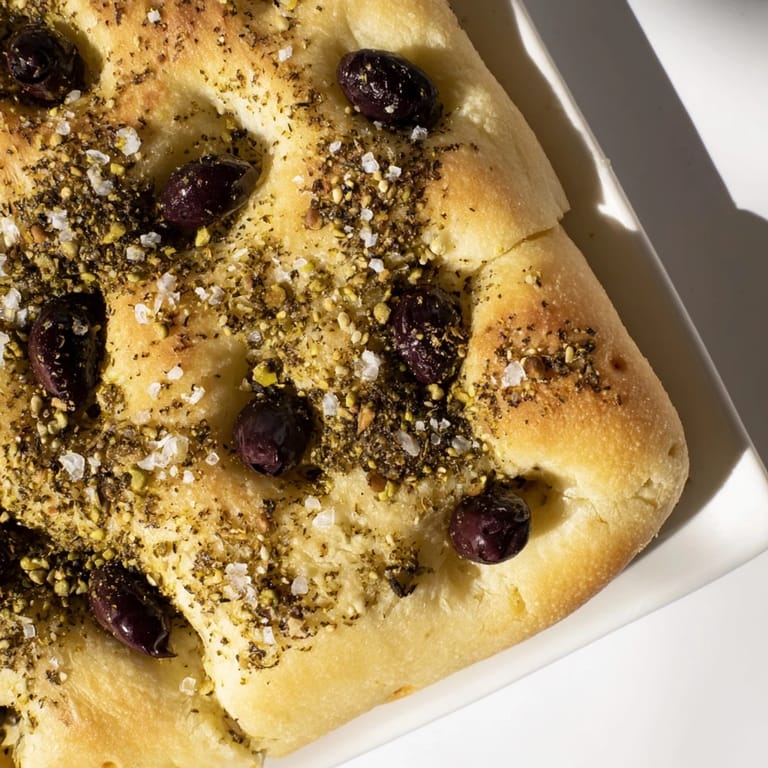
- Zaatar spice blend (2 tbsp): This fragrant mix of dried herbs, sesame, and sumac is the heart of the recipe—use it generously and let it toast slightly on the warm dough.
- Kalamata olives (100 g, pitted): Their briny punch balances the earthiness of zaatar; halve them so they distribute evenly and stay tucked into the dough.
- Flaky sea salt (1 tsp): This finishes the focaccia with a subtle crunch and visual appeal that regular salt just can't match.
Tired of Takeout? 🥡
Get 10 meals you can make faster than delivery arrives. Seriously.
One email. No spam. Unsubscribe anytime.
Instructions
- Mix your dry base:
- Combine the bread flour and fine sea salt in a large bowl, then whisk to distribute the salt evenly so you don't end up with salty pockets.
- Awaken the yeast:
- In a separate bowl, sprinkle the yeast over warm water and wait about 5 minutes until it foams slightly—this is your signal that it's alive and ready to work.
- Bring it together:
- Pour the yeast mixture and olive oil into the flour, mixing until a shaggy, rough dough forms that barely holds together.
- Develop the gluten:
- Knead on a floured surface or in a stand mixer with the dough hook for 8–10 minutes until the dough becomes smooth, elastic, and springs back when you poke it.
- Let it rise:
- Oil a bowl, nestle the dough in, cover it with a damp towel, and let it sit in a warm spot for about 1 hour until it's puffy and doubled—this is when the flavor develops.
- Shape and second rise:
- Oil your baking sheet, press the dough evenly into it, cover again, and let it rise for 30 more minutes until it's pillowy and ready to dimple.
- Dimple and top:
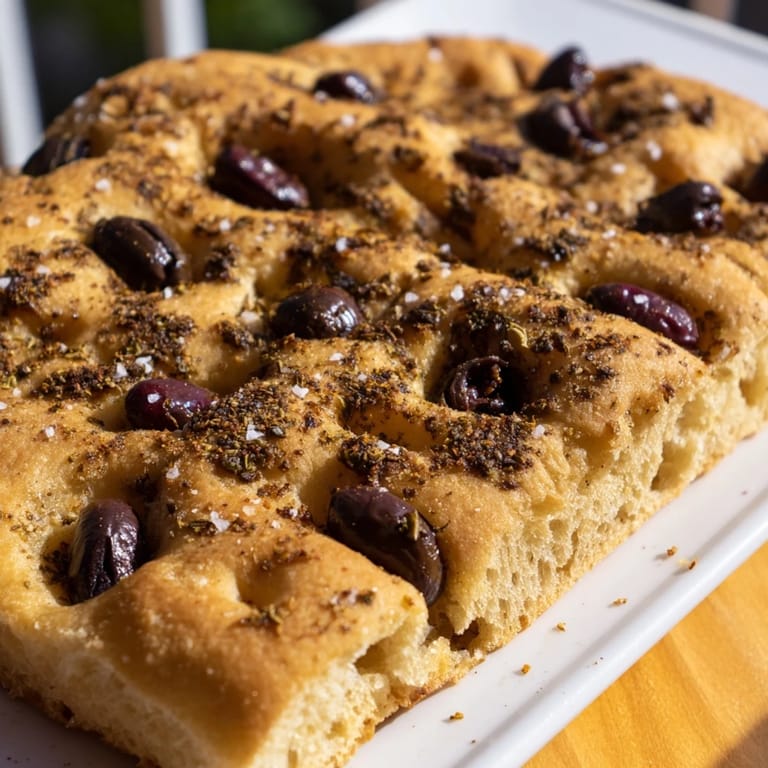
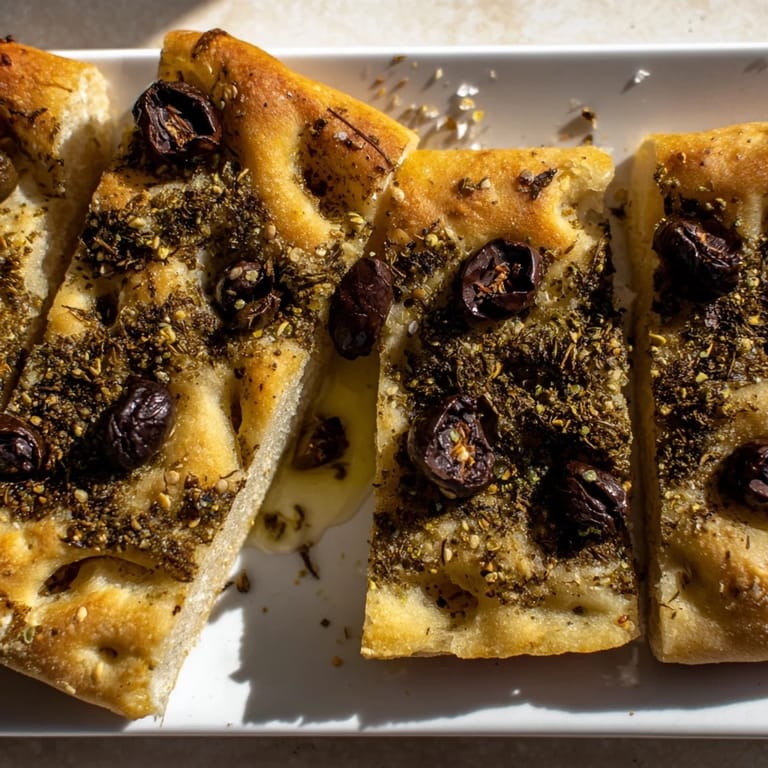
- Use your fingertips to press deep indentations all over the surface—these pockets will hold the oil and toppings, creating little flavor explosions. Drizzle with olive oil, scatter zaatar across the entire surface, dot with olives, and finish with flaky salt.
- Bake until golden:
- Bake at 220°C for 20–25 minutes until the edges turn a deep golden brown and the top smells incredible—the zaatar will deepen in color and intensity.
- Cool and serve:
- Let it cool for just a few minutes so it's still warm but not so hot you burn your mouth, then slice and serve with whatever dipping sauce calls to you.
 Pin it
 There was one evening when I pulled this focaccia out of the oven and my teenage daughter, who usually turns her nose up at homemade bread, actually asked for seconds. We sat together in the kitchen while it was still cooling, just eating and talking—no phones, no rush—and that's when I realized that this recipe isn't really about impressing people; it's about creating a moment where everyone wants to linger.
The Magic of Zaatar
Zaatar is one of those ingredients that seems mysterious until you taste it, and then suddenly it's everywhere in your cooking. It's a blend of dried thyme, sumac, and sesame seeds, and when it meets warm olive oil and dough, it transforms into something aromatic and almost savory-sweet. The first time I used it, I was nervous about overpowering the bread, but zaatar is actually quite gentle—it adds complexity rather than dominance. Since then, I've learned to respect it: don't skimp, and don't hold back on the generous drizzle of oil that helps it bloom and release its flavors.
Olive Oil Is Not Just Fat
Using quality extra virgin olive oil in this recipe is not pretentious—it's essential. The oil doesn't just keep the focaccia moist; it's the vehicle that carries the flavor of the zaatar and creates those crispy, golden edges that make you want to eat the whole thing. I learned this the hard way when I once tried to economize with basic olive oil, and the result was a perfectly nice bread that tasted like, well, bread. The next time I splurged on a good bottle with that peppery finish, and the entire loaf came alive. It's a small detail that makes a huge difference.
Timing and Temperature
Focaccia is forgiving, but it does care about temperature and timing. I've learned to trust the visual cues—the dough should be puffy and nearly doubled after the first rise, and the second rise should leave the dough soft but still with some resistance when you press it. The oven temperature matters too; 220°C is hot enough to create that beautiful golden crust without burning the zaatar. One trick I discovered is to open the oven just briefly at the 20-minute mark to check for color—if it's already deep golden, it might be done early, and every oven is different.
- Use a kitchen thermometer for the water temperature if you're new to bread baking.
- Mark your oven with a Post-it note to remind yourself this is a quick bake—don't forget it in there.
- If you're freezing extra focaccia, slice it first so you can toast individual pieces later.
 Pin it
 This focaccia has become my go-to when I want to impress someone without spending hours in the kitchen. It's humble enough to eat plain, but special enough to feel like a gift.
Recipe FAQs
- → What is zaatar and how does it affect flavor?
Zaatar is a Middle Eastern spice blend combining herbs, sesame seeds, and sumac. It adds a tangy, earthy, and slightly nutty dimension to the bread’s flavor.
- → Can I substitute Kalamata olives with other olives?
Yes, green olives can be used for a milder, less briny taste while still complementing the focaccia's savory profile.
- → How important is the dough rising time?
Allowing the dough to rise twice ensures a fluffy, airy texture and develops the bread’s flavor fully before baking.
- → What variations can enhance the basic focaccia topping?
Adding sun-dried tomatoes or roasted garlic can elevate the flavor, introducing sweet and aromatic notes.
- → How should I serve the focaccia for best taste?
Serve warm or at room temperature, paired with dips like hummus or olive oil to enhance the Mediterranean experience.