 Pin it
 The smell of garlic and basil hit me the moment I walked into my neighbor's kitchen on a Tuesday evening. She was pulling a bubbling pan of pesto chicken from the oven, cheese browned at the edges, and I knew I had to learn her trick. That night, she taught me how layering pesto under the marinara keeps the chicken from drying out and adds a fresh, herby punch that plain chicken parm never had. I've been making it her way ever since, and now it's the dish I turn to when I want dinner to feel special without spending hours in the kitchen.
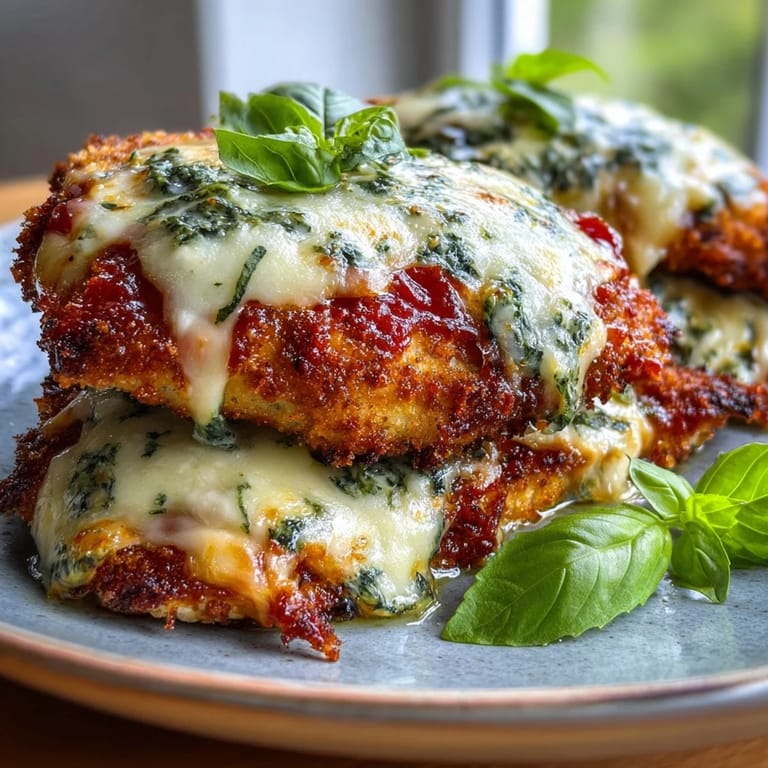
I made this for my sister's birthday dinner last spring, and she insisted on taking a photo before we even sat down to eat. The golden breading, the bubbling cheese, the little flecks of green pesto peeking through — it just looked restaurant-quality. When she took her first bite, she paused, then asked if I'd added something secret to the chicken. I hadn't, but the pesto does that: it tricks people into thinking you've done more than you actually did.
Ingredients
- Boneless, skinless chicken breasts: Pounding them to an even thickness is the move I skipped the first time, and half my chicken was overcooked while the other half was still pink, so don't skip it.
- Salt and pepper: Season generously on both sides before breading, because once it's coated, you can't fix bland chicken.
- All-purpose flour: This first dusting helps the egg stick, and shaking off the excess keeps the breading from clumping.
- Large eggs: Beat them well so the chicken gets an even coat, which makes the breadcrumbs cling better and brown more evenly.
- Italian breadcrumbs: The pre-seasoned kind saves you from adding herbs, but panko works too if you want extra crunch.
- Olive oil: Just enough to get a golden crust in the skillet before the oven finishes the job.
- Basil pesto: Store-bought is fine, but if you have homemade in the fridge, use it — the flavor difference is real.
- Marinara sauce: A good jarred marinara works perfectly here, or use leftover Sunday gravy if you have it.
- Mozzarella cheese, shredded: Freshly shredded melts smoother than pre-shredded, which sometimes has anti-caking powder that makes it grainy.
- Parmesan cheese, grated: The salty, nutty bite of Parmesan balances the creamy mozzarella and ties everything together.
- Fresh basil leaves: Optional, but a few torn leaves on top make it look like you tried harder than you did.
Tired of Takeout? 🥡
Get 10 meals you can make faster than delivery arrives. Seriously.
One email. No spam. Unsubscribe anytime.
Instructions
- Preheat and prep:
- Set your oven to 375°F so it's ready when the chicken comes out of the skillet. Grab your meat mallet or a rolling pin and pound each chicken breast until it's about the same thickness all over, which helps it cook evenly and keeps the middle from staying raw while the edges dry out.
- Season the chicken:
- Sprinkle both sides with salt and pepper, and don't be shy. This is your only chance to season the actual meat, so make it count.
- Set up the breading station:
- Line up three shallow dishes: flour in the first, beaten eggs in the second, breadcrumbs in the third. It sounds fussy, but the assembly line makes the whole process faster and less messy.
- Bread the chicken:
- Dredge each breast in flour, shake off the excess, dip it into the egg, then press it into the breadcrumbs until it's completely coated. Pat the crumbs on gently so they stick.
- Pan-fry for color:
- Heat the olive oil in a large skillet over medium-high heat and add the breaded chicken. Cook for 3 to 4 minutes per side until the outside is golden and crispy, but don't worry about cooking it through — the oven will finish the job.
- Move to the baking dish:
- Transfer the browned chicken breasts to a baking dish in a single layer. They should have a little space between them so the cheese doesn't glue them together.
- Layer the pesto and sauce:
- Spread 1 to 2 tablespoons of pesto over each chicken breast, then spoon marinara sauce on top. The pesto goes first so it melts into the chicken and doesn't get lost under the sauce.
- Add the cheese:
- Sprinkle mozzarella and Parmesan evenly over each piece, making sure every bite will have some cheese. Don't be stingy — this is where the magic happens.
- Bake until bubbly:
- Slide the baking dish into the oven and bake for 15 to 20 minutes, until the chicken reaches 165°F inside and the cheese is melted and starting to brown at the edges. If you want extra color on the cheese, switch the oven to broil for the last minute or two, but watch it closely so it doesn't burn.
- Garnish and serve:
- Pull the chicken from the oven, scatter a few fresh basil leaves on top if you have them, and serve hot. It's perfect over pasta, next to garlic bread, or with a simple green salad on the side.
 Pin it
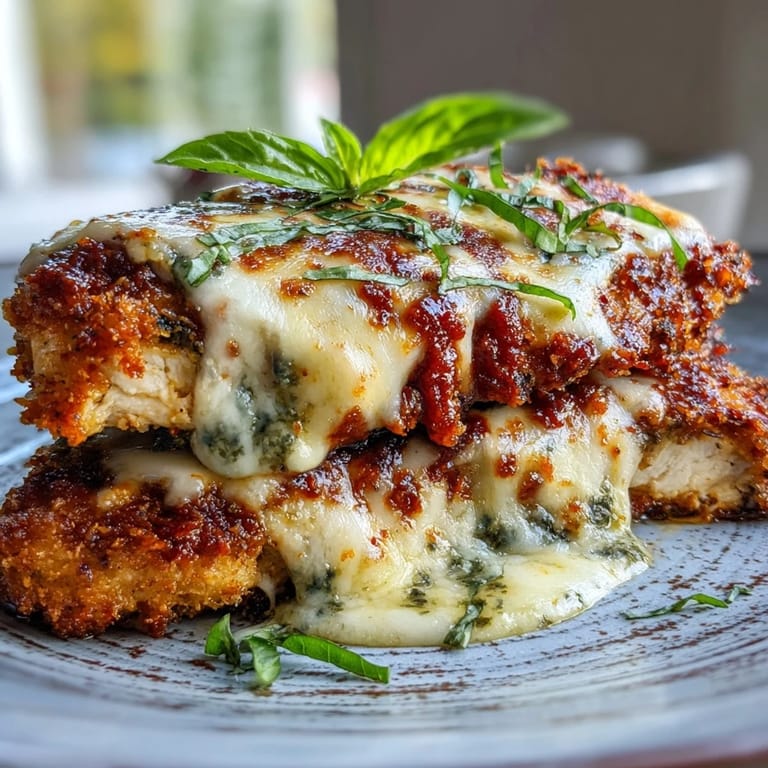
 The first time I served this to my kids, my youngest asked if we were celebrating something. We weren't, but I realized that this dish just feels like a celebration. The way the cheese stretches when you cut into it, the steam that rises with that garlicky pesto smell — it turns a regular Wednesday into something worth gathering around the table for.
Making It Ahead
You can bread the chicken in the morning and keep it covered in the fridge until you're ready to cook. Just let it sit at room temperature for about 10 minutes before frying so it cooks evenly. I've also assembled the whole dish up to the point of baking, covered it tightly, and refrigerated it for up to a day — just add an extra 5 minutes to the bake time if you're starting from cold.
Storing and Reheating
Leftovers keep in the fridge for up to three days in an airtight container. Reheat them in the oven at 350°F until warmed through, not the microwave, or the breading will go soggy and you'll lose that crispy texture. I learned that the hard way after nuking a piece at lunch and ending up with something that tasted fine but had the texture of wet cardboard.
Swaps and Variations
If you want extra crunch, swap regular breadcrumbs for panko. For a lighter version, skip the breading altogether and just season the chicken, sear it, then top with pesto, sauce, and cheese before baking. You can also use chicken thighs instead of breasts — they're more forgiving and stay juicier, though the cook time might be a minute or two longer.
- Try sun-dried tomato pesto instead of basil for a sweeter, tangier flavor.
- Add a handful of spinach or arugula under the cheese for extra greens without changing the taste much.
- Use provolone or fontina in place of mozzarella if you want a richer, creamier melt.
 Pin it
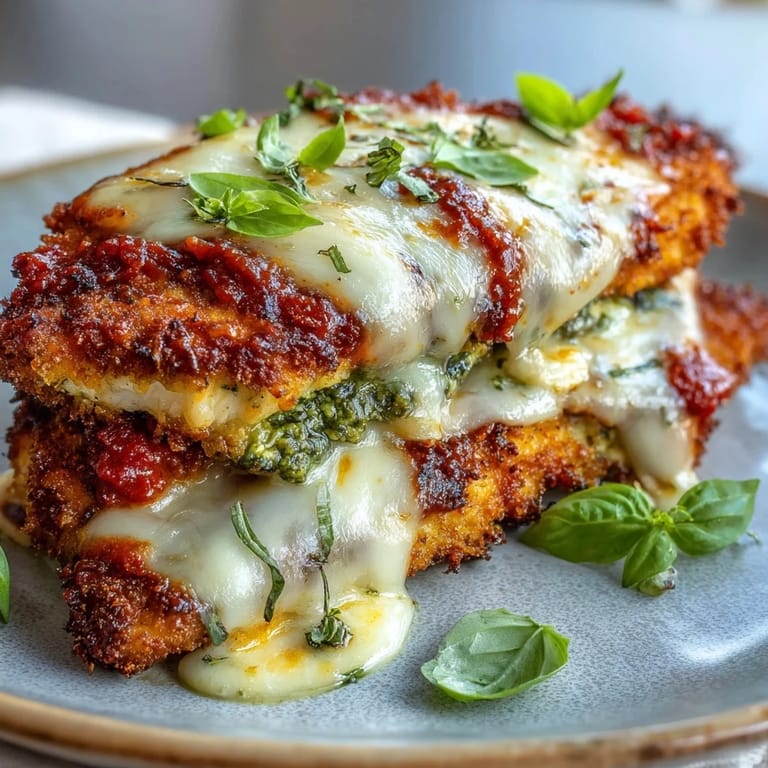
 This is the kind of recipe that makes you look like you know what you're doing in the kitchen, even if you're winging it. Serve it with confidence, and everyone will assume you've been making it for years.
Recipe FAQs
- → Can I make this ahead of time?
Yes, you can bread the chicken up to 24 hours in advance and store it refrigerated. You can also assemble the entire dish, refrigerate unbaked, then cook when ready. Add 5-10 extra minutes to baking time if cooking from cold.
- → What's the internal temperature for fully cooked chicken?
Chicken is safely cooked when it reaches an internal temperature of 165°F (74°C). Use a meat thermometer inserted into the thickest part of the breast to ensure doneness without overcooking.
- → Can I freeze this dish?
Assembled but unbaked chicken freezes well for up to 3 months. Wrap tightly and thaw overnight in the refrigerator before baking. Already cooked portions can be frozen for 2-3 months and reheated in a 350°F oven.
- → What can I serve with this?
Classic sides include spaghetti, fettuccine, or other pasta tossed with olive oil and garlic. Crusty bread, roasted vegetables like broccoli or zucchini, and Caesar salad also complement the rich flavors beautifully.
- → How do I get the crispiest coating?
Pat chicken dry before breading, press breadcrumbs firmly to adhere, and don't overcrowd the pan when searing. Let the browned chicken rest on a wire rack briefly before adding toppings to maintain crunch.
- → Can I use store-bought pesto?
Absolutely. Store-bought pesto works wonderfully and saves time. If preferred, homemade pesto with fresh basil, pine nuts, garlic, Parmesan, and olive oil will give you even more vibrant flavor.