 Pin it
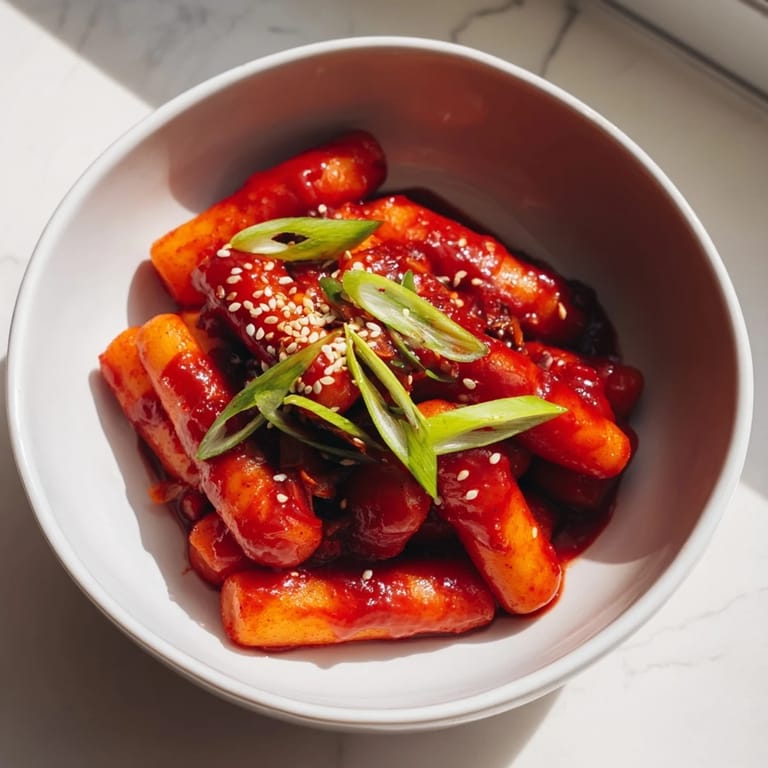
 My first encounter with tteokbokki wasn't in a fancy restaurant but from a street vendor near Myeongdong who had a line wrapped around the corner on a freezing February evening. I watched her work with such ease, the rice cakes tumbling in that glossy red sauce, and I knew I had to figure out how to recreate that magic at home. What started as curiosity became an obsession, and now this spicy-sweet dish has become my go-to when I need comfort food that doesn't require hours in the kitchen.
I made this for my roommate on a random Tuesday when we were both exhausted from work, and she looked up from her bowl with this surprised expression, like I'd just handed her a ticket back to Seoul. She asked for the recipe immediately, and I realized tteokbokki has this quiet power to transform an ordinary evening into something memorable. Now whenever she visits, it's the first thing she requests.
Ingredients
- Rice Cakes: Look for Korean tteok in the frozen section of Asian markets, and don't skip soaking them if they've been refrigerated, or they'll stay stubbornly tough.
- Gochujang: This fermented chili paste is the soul of the dish, bringing depth and complexity that fresh chili powder simply cannot match.
- Gochugaru: Korean chili flakes add an extra layer of heat and texture that gochujang alone won't deliver.
- Soy Sauce: Use a quality soy sauce or tamari if you're avoiding gluten, since the flavor difference is noticeable.
- Honey: This rounds out the spice and adds a subtle richness that balances the heat beautifully.
- Garlic: Minced fresh garlic makes all the difference; jarred simply won't have the same punch.
- Dried Kelp and Anchovies: These create an umami-rich broth that tastes like you've been simmering it for hours when you've really only spent 10 minutes on it.
- Green Onions: Added at the very end, they bring freshness and a subtle onion bite that cuts through the richness.
- Sesame Seeds: These aren't just garnish, they add a toasty nuttiness that makes people ask what your secret ingredient is.
Tired of Takeout? 🥡
Get 10 meals you can make faster than delivery arrives. Seriously.
One email. No spam. Unsubscribe anytime.
Instructions
- Prepare Your Rice Cakes:
- Soak them in warm water for 10 minutes if they've been sitting in the fridge, and you'll feel the difference the moment they hit the sauce. They'll be tender rather than requiring a wrestling match to chew.
- Build Your Flavor Base:
- Simmer the kelp and anchovies in water for 10 minutes, then remove them and reserve that golden broth, which is where all the umami magic lives. Don't skip this step even if it feels like an extra thing to do.
- Create the Sauce:
- Whisk the gochujang, gochugaru, soy sauce, sugar, honey, and garlic into the broth, stirring until the paste completely dissolves and you've got a smooth, glossy sauce. Take a moment to smell it, because that's the moment you'll know it's going to be good.
- Bring It Together:
- Add the rice cakes along with onion and cabbage, then bring everything to a gentle boil, stirring occasionally so nothing sticks to the bottom. Watch how the sauce coats each rice cake as it simmers.
- Simmer to Perfection:
- Let it bubble away for 10 to 15 minutes until the sauce thickens and the rice cakes are soft and chewy with just a slight resistance when you bite them. This is where patience pays off.
- Finish with Freshness:
- Add the green onions and boiled eggs in the last 2 minutes so they keep their bite and brightness. Transfer everything to a serving dish and shower it with sesame seeds.
 Pin it
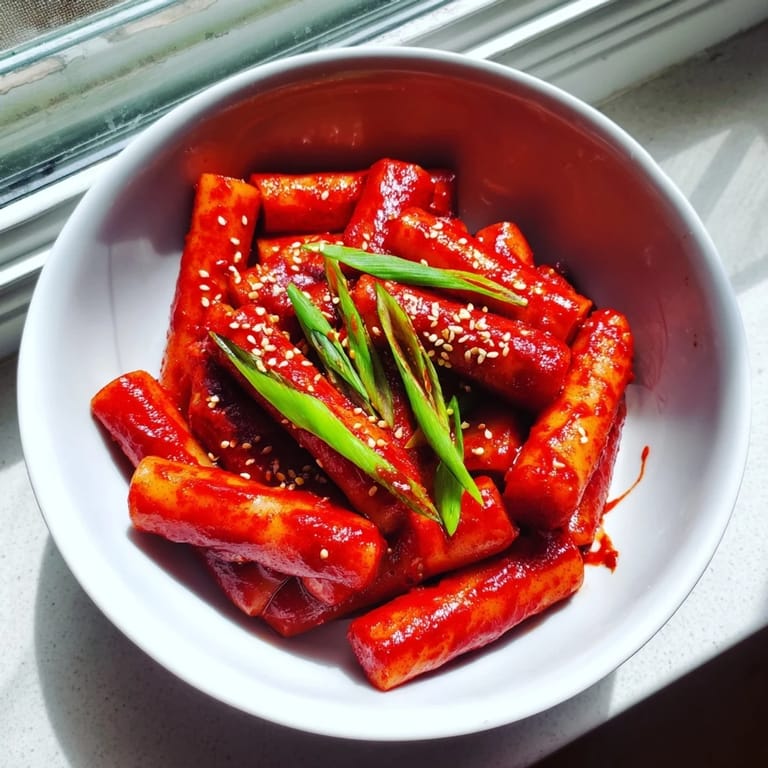
 There's something almost meditative about watching tteokbokki transform from separate ingredients into something unified and alive. The kitchen fills with the aroma of gochujang and garlic, and suddenly it doesn't matter what kind of day you've had, because you're about to eat something that tastes like celebration.
The Art of Adjusting Heat
Spice tolerance is personal, and this recipe respects that. Start with the gochugaru amount and taste as you go, adding more if you want to set your mouth on fire or reducing it if you prefer a gentler approach. I learned this the hard way when I made a batch for my mom and had to stand by as she drank water between bites, but now I always ask people how brave they're feeling before I cook.
Making It a Meal
Tteokbokki is often served as part of a spread in Korean cuisine, and there's wisdom in that. It's rich and satisfying enough to stand alone, but pairing it with pickled radish cuts through the heat and sweetness in a way that feels intentional. I've also discovered that a simple side of steamed dumplings or rice adds substance without competing for attention.
Storage and Reheating Tips
Leftovers keep in the refrigerator for up to 3 days, and honestly, they sometimes taste even better the next day when all the flavors have had time to meld. Reheat gently on the stovetop with a splash of water, stirring occasionally, because microwaving can make the rice cakes tough.
- Store in an airtight container and keep the rice cakes and sauce together so they stay evenly coated.
- If the sauce has thickened too much after sitting, just add a little water while reheating to loosen it up.
- Fresh green onions and sesame seeds are best added right before serving for maximum freshness and crunch.
 Pin it
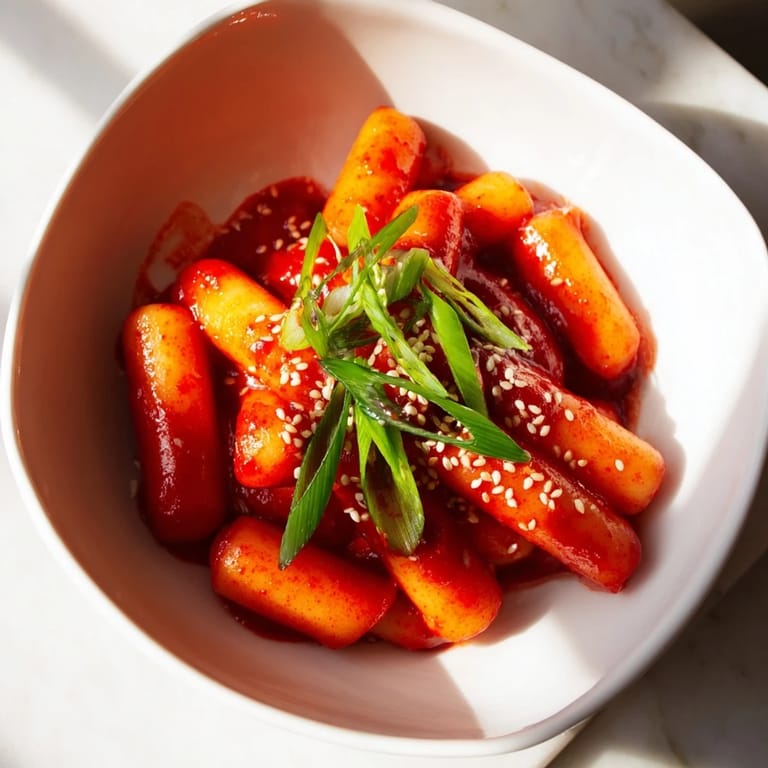
 This dish has a way of bringing people together in the most unpretentious way possible. Serve it hot and watch people forget their manners a little, reaching back in for just one more bite.
Recipe FAQs
- → What are Korean rice cakes and where can I find them?
Korean rice cakes (tteok) are cylindrical, chewy starches made from glutinous rice. Find them in Asian markets, frozen or refrigerated sections, or online retailers specializing in Korean ingredients. They're distinct from Japanese mochi and have a unique texture when cooked.
- → Can I make this vegetarian?
Absolutely. Skip the anchovies and use kelp-only broth for a plant-based version. Kelp provides umami depth on its own. Avoid fish cakes as an add-in, and verify your gochujang and soy sauce are vegetarian-certified, as some brands use fish-based ingredients.
- → How spicy is tteokbokki?
The spice level depends on gochugaru quantity. Start with the 1 tablespoon suggested, taste, and adjust upward for more heat. Gochujang provides mild spice while gochugaru delivers sharper kick. Beginners can reduce both by half and gradually increase to preference.
- → What's the difference between gochujang and gochugaru?
Gochujang is a thick, fermented chili paste with complex umami depth, while gochugaru is dried chili flakes with sharper, fresher heat. Using both creates layered spice and richness that defines authentic tteokbokki sauce complexity.
- → Can I prepare this ahead of time?
Cook the broth base up to two days ahead and refrigerate. Cook rice cakes fresh just before serving, as they become mushy if stored in sauce. Reheat broth, add fresh cakes, and simmer until tender for best texture and flavor.
- → What vegetables work well in this dish?
Beyond onions and cabbage, try sliced mushrooms, carrots, sweet potato, bell peppers, or bok choy. Add quick-cooking vegetables in the final 5 minutes to maintain texture. Boiled eggs and fish cakes are traditional proteins that enhance the final dish.