 Pin it
 There's a particular Tuesday afternoon I can't shake—the kitchen smelled like roasting eggplant and garlic, and my friend Sarah was sitting on the counter, half-skeptical about the whole thing. She'd just moved to the neighborhood and brought over a bottle of wine without knowing what we'd eat. I'd spotted a bunch of vegetables in my crisper drawer and a can of chickpeas, and somewhere between the uncertainty and the sizzle of the oven, this dish emerged. It became the reason she kept coming back.
I made this for my book club once, thinking it was too simple, too casual for the occasion. Three people went back for thirds, and someone asked me to write down the recipe on a napkin. That's when I realized it wasn't about complexity—it was about the kind of quiet confidence that comes from letting good ingredients speak for themselves.
Ingredients
- Canned chickpeas, drained and rinsed (1½ cups): The backbone of your hummus; rinsing them removes the starchy liquid that can make things gluey, so don't skip that step.
- Tahini (¼ cup): This sesame paste is what gives hummus its signature creamy depth—it's worth buying from somewhere with real turnover.
- Fresh lemon juice (2 tablespoons): Bottled juice will work in a pinch, but fresh lemon adds a brightness that changes everything.
- Garlic clove, minced (1): One clove sounds minimal, but it's plenty—raw garlic can overpower if you're not careful.
- Extra-virgin olive oil (3 tablespoons, plus more for drizzling): This is tasting oil, so treat it like a final flourish rather than just a cooking ingredient.
- Ground cumin (½ teaspoon): It adds warmth without announcement, grounding the whole thing in a Mediterranean direction.
- Sea salt (½ teaspoon): Trust your palate here—you'll taste as you go and likely add more.
- Cold water (2–3 tablespoons): The secret to hummus that's creamy without breaking is adding water slowly while the processor runs.
- Red bell pepper, cut into strips (1 medium): The color matters as much as the flavor—it's what makes people want to eat this.
- Zucchini, sliced into half-moons (1 small): Half-moons roast more evenly and look intentional on the plate.
- Red onion, cut into wedges (1 small): Wedges char beautifully and add sweetness as they caramelize.
- Eggplant, cut into cubes (1 small): Smaller cubes cook faster and get more surface area for charring—that's where the flavor lives.
- Olive oil (1 tablespoon): Just enough to coat the vegetables without making them greasy.
- Smoked paprika (½ teaspoon): This gives the illusion that everything spent hours over a fire.
- Pine nuts (3 tablespoons): They toast quickly and can burn faster than you'd think, so stay close.
- Fresh parsley, chopped (2 tablespoons): A last-minute brightness that prevents the whole thing from feeling heavy.
- Sumac or zaatar (1 teaspoon, optional): If you have it, it's the flourish that makes people ask questions.
Tired of Takeout? 🥡
Get 10 meals you can make faster than delivery arrives. Seriously.
One email. No spam. Unsubscribe anytime.
Instructions
- Heat your oven and prepare the vegetables:
- Get the oven to 425°F and while it preheats, toss your bell pepper, zucchini, red onion, and eggplant with that tablespoon of olive oil, smoked paprika, salt, and pepper. The vegetables should shimmer but not swim in oil.
- Roast until the edges blacken:
- Spread everything on a baking sheet and roast for 22 to 25 minutes, stirring once halfway through. You're looking for char—those dark, almost burnt edges are where the magic happens.
- Make the hummus while vegetables roast:
- In your food processor, combine chickpeas, tahini, lemon juice, garlic, those three tablespoons of olive oil, cumin, and sea salt. Pulse until it starts coming together, then blend until smooth.
- Achieve the right consistency:
- Add cold water one tablespoon at a time while the processor runs, stopping when you've got something creamy but not thin—it should hold its shape slightly when you spread it. Taste it, adjust salt or lemon, and taste again.
- Toast the pine nuts until fragrant:
- While the vegetables finish roasting, put your pine nuts in a dry skillet over medium heat. Stir them constantly for 2 to 3 minutes—they go from golden to burnt in about ten seconds, so don't walk away.
- Compose the dish:
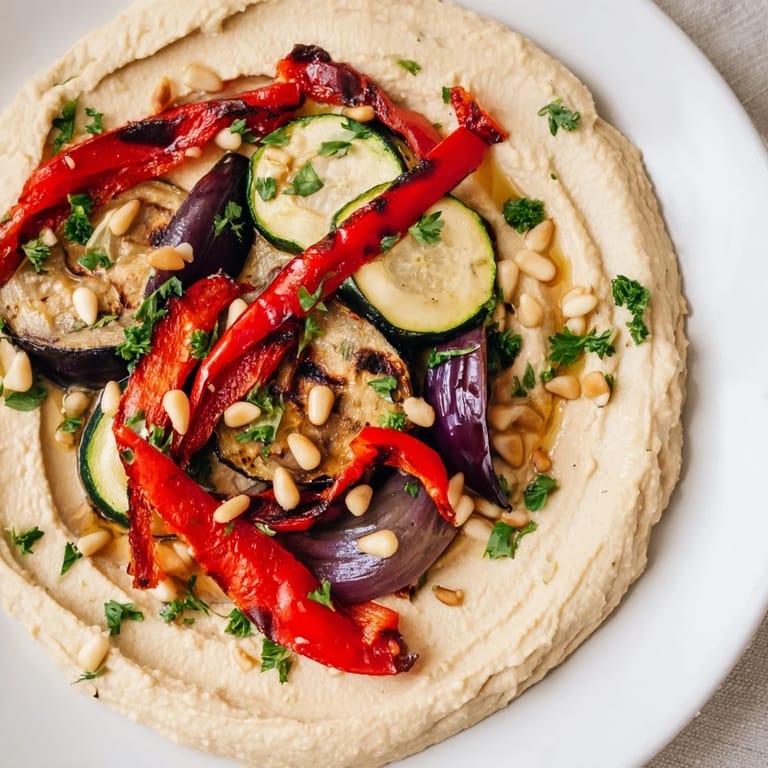
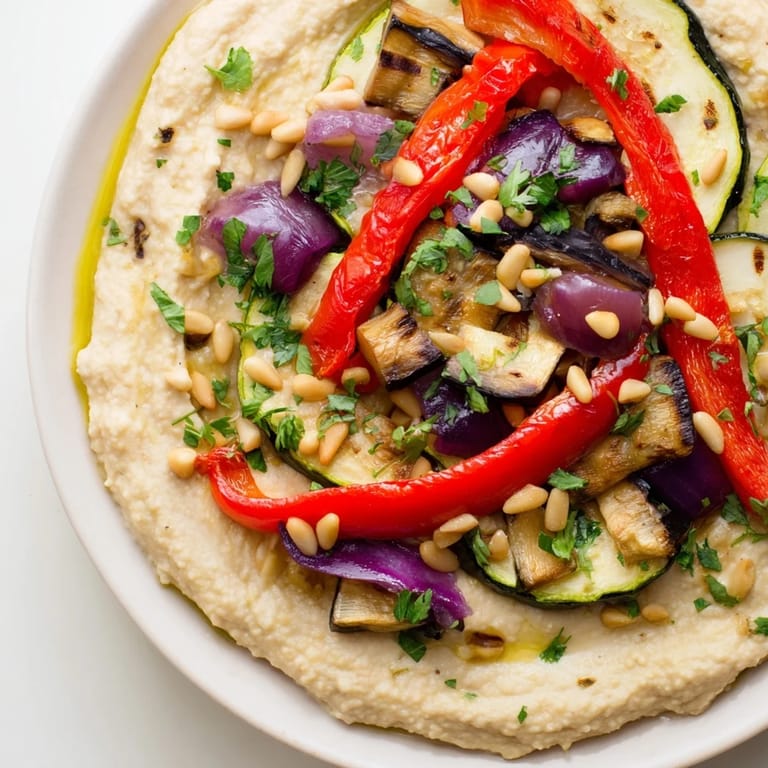
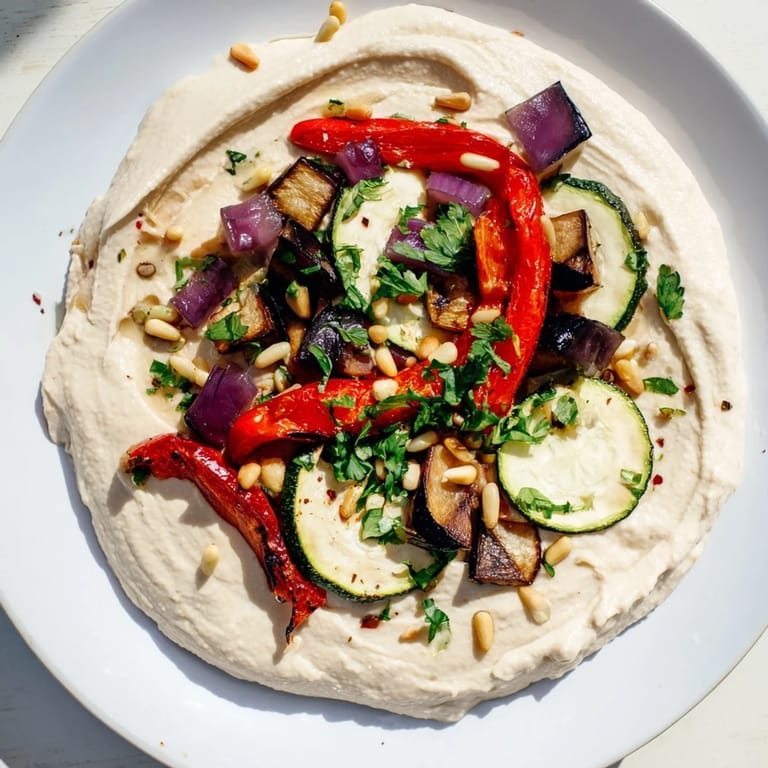
- Spread your hummus onto a serving platter in an uneven swoosh, like you're being a little bit careless on purpose. Crown it with the warm roasted vegetables, scatter the toasted pine nuts across the top, then sprinkle with fresh parsley and sumac or zaatar if you're using it.
- Finish and serve:
- Drizzle generously with olive oil and serve while the vegetables are still warm enough to steam slightly into the cool hummus. Warm pita or raw vegetables on the side are the natural companions here.
 Pin it
 My neighbor tasted this once and asked if I'd studied cooking in the Mediterranean. I hadn't—I'd just paid attention to what made my own kitchen feel generous and alive when the oven was warm and people were hungry. That's the whole story, really.
The Roasting Moment
There's something meditative about vegetables charring in a hot oven. You're not standing over a stove stirring constantly—you toss them once, then listen for the sizzle. When you open that oven door around the twenty-minute mark, the smell will tell you everything. The vegetables should smell a little caramelized, a little smoky, almost like they're telling you they're ready. That's your signal to look closer.
Hummus as a Canvas
Once you understand how hummus works—that it's just chickpeas being coaxed into something luxurious through patience and the right ratio of tahini, acid, and oil—you can build an entire philosophy around it. This version leans into warmth with cumin and smoke, but you could easily add harissa if you want heat, or roasted red peppers if you want sweetness. The base never changes; everything else is conversation.
Building Layers of Flavor
The truth about this dish is that every element matters, but not because you're doing something difficult—because you're paying attention. The pine nuts wouldn't sing without that moment in the dry skillet. The vegetables wouldn't feel charred without high heat and patience. The hummus wouldn't be creamy without cold water added incrementally. None of these are secrets; they're just moments of care.
- Season vegetables boldly—they need enough salt and paprika to taste like themselves after roasting.
- Taste the hummus before you plate anything; it's easier to adjust now than after.
- If your sumac or zaatar has been sitting in a cabinet for months, replace it—these are flavor ingredients, and they fade.
 Pin it
 This is the kind of food that doesn't need permission to exist—it's loud enough to matter, quiet enough to share, and forgiving enough to make again whenever people arrive hungry and you're wondering what to feed them.
Recipe FAQs
- → How do I achieve a creamy hummus base?
Use canned chickpeas blended with tahini, lemon juice, garlic, olive oil, cumin, and sea salt. Add cold water gradually until desired smoothness is reached.
- → What vegetables work best for roasting?
Bell peppers, zucchini, red onion, and eggplant are ideal. Toss with olive oil, smoked paprika, salt, and pepper before roasting to bring out smoky flavors.
- → How to toast pine nuts properly?
Toast pine nuts in a dry skillet over medium heat, stirring frequently until golden and fragrant, usually 2–3 minutes.
- → Can I substitute the vegetables used?
Yes, seasonal vegetables like carrots, cauliflower, or mushrooms work well roasted and paired with the hummus base.
- → What serving ideas complement this dish?
Serve with warm pita bread, fresh crudités, or as a topping for grain bowls to add texture and flavor contrast.
- → Is this dish suitable for special diets?
It is vegan and gluten-free if served without bread or with gluten-free alternatives. Check ingredients for any allergens like sesame and tree nuts.