 Pin it
 There's something about a bowl of chili that stops time in the kitchen. My neighbor handed me a spoon one October evening and said, "Try this," and I realized I'd been making chili all wrong for years—too thin, too cautious with spices. That moment changed how I approached this dish entirely, turning it from something I tolerated into something I actually craved on cold afternoons.
I made this for a group of friends during a late-season camping trip, and someone asked for seconds before finishing their first bowl. That's when I knew the layers of cumin and smoked paprika were doing their job, creating something that felt both comforting and interesting enough to hold everyone's attention.
Ingredients
- Olive oil: Two tablespoons creates the foundation for everything that follows, so don't skip it or use a substitute oil you're unsure about.
- Onion and garlic: The aromatic duo that teaches your pot what flavor means—don't rush their softening.
- Bell peppers (red and green): Each color brings its own sweetness, creating depth that store-bought chili powder alone could never achieve.
- Ground beef: A pound is enough to anchor the dish without making it feel heavy; turkey and plant-based alternatives work equally well if you're adjusting for preference.
- Tomato paste: This two-tablespoon secret weapon concentrates tomato flavor into something almost luxurious when cooked properly.
- Diced tomatoes: One can gives you both juice and texture, the backbone that holds everything together.
- Kidney beans and black beans: Drain and rinse both cans thoroughly because that starchy liquid will muddy your chili's clarity.
- Corn kernels: A full cup adds sweetness that balances heat and prevents the dish from tasting one-dimensional.
- Spice blend (chili powder, cumin, smoked paprika, oregano): These aren't suggestions—they're what separates good chili from forgettable chili.
- Salt, black pepper, and cayenne: Start conservative with cayenne; you can always add more heat but you can't take it back.
- Beef or vegetable broth: One cup keeps everything simmering without drying out the pot.
- Rice or cooked grains: Two cups of your choice provides the neutral canvas your chili deserves.
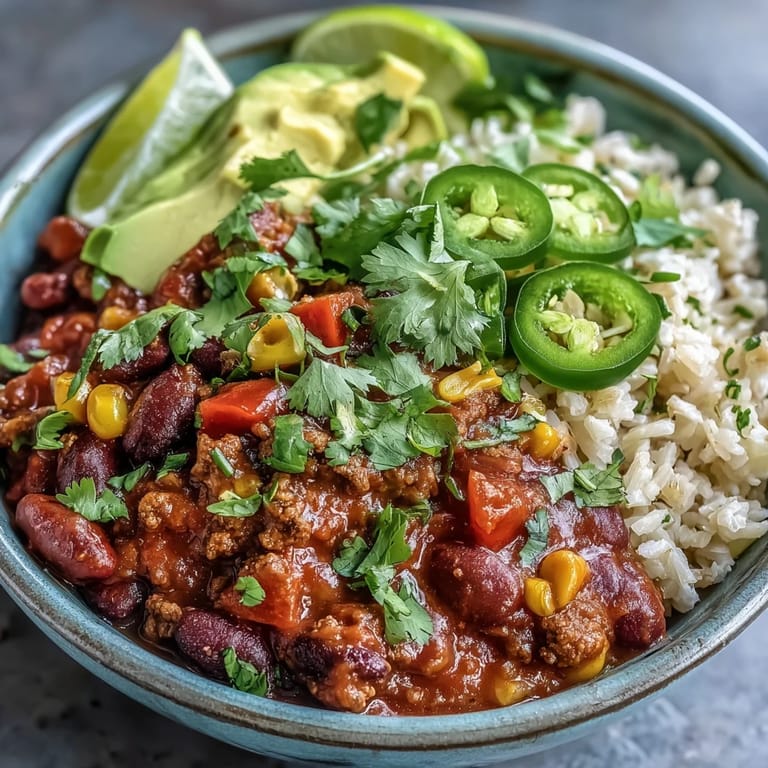
- Toppings: Cheese, sour cream, green onions, cilantro, avocado, jalapeños, and lime wedges are where people make this their own.
Tired of Takeout? 🥡
Get 10 meals you can make faster than delivery arrives. Seriously.
One email. No spam. Unsubscribe anytime.
Instructions
- Build your flavor base:
- Heat the olive oil in a large pot over medium heat, then add your diced onion and let it soften for two to three minutes until the edges turn translucent and the kitchen smells like possibility. You'll know it's ready when you can barely recognize the onion's individual pieces.
- Layer in the aromatics:
- Add your minced garlic and both bell peppers, cooking for another three to four minutes while stirring occasionally so nothing sticks. This is when your kitchen becomes irresistible—that combination of garlic and sweet peppers should make you pause and breathe it in.
- Brown the meat:
- Add your ground beef and break it up with a wooden spoon, cooking until it's completely browned and no pink remains anywhere. This takes about five minutes if you're attentive, stirring frequently to prevent large clumps.
- Bloom the tomato paste:
- Stir in your two tablespoons of tomato paste and let it cook undisturbed for one full minute—this caramelization is where deep flavor comes from. You'll notice the mixture darken slightly and smell almost sweet.
- Combine everything:
- Add your diced tomatoes, both types of beans (drained and rinsed), corn, and all your spices at once, stirring well so nothing settles at the bottom. The mixture should look almost overwhelmingly full at this point.
- Simmer until harmonious:
- Pour in your broth, bring everything to a simmer, then reduce heat to low, cover partially, and let it cook for twenty-five to thirty minutes while stirring occasionally. You're not looking for a boil here—just gentle bubbles that mean flavors are merging.
- Prepare your grains:
- While the chili simmers, cook your rice or grains according to package directions so they're ready when you are. Timing them together means everything comes to the table warm and unified.
- Assemble and serve:
- Spoon your cooked grain into bowls, ladle the chili generously over the top, then let everyone add their preferred toppings from the spread you've arranged nearby.
 Pin it
 The moment this dish became real for me was when my mother-in-law, who never comments on food, took a second spoonful and nodded slowly. That silent approval meant more than any compliment, signaling I'd created something worth remembering.
The Science of Spice Layering
Every spice in this recipe does something different—chili powder brings heat and earthiness, cumin adds warmth and complexity, smoked paprika contributes depth, and oregano ties everything together with herbaceous notes. When they simmer together for thirty minutes, they stop being individual flavors and become one unified voice. This is why adding all your spices at once matters more than the order you add them.
Grain Choice Changes Everything
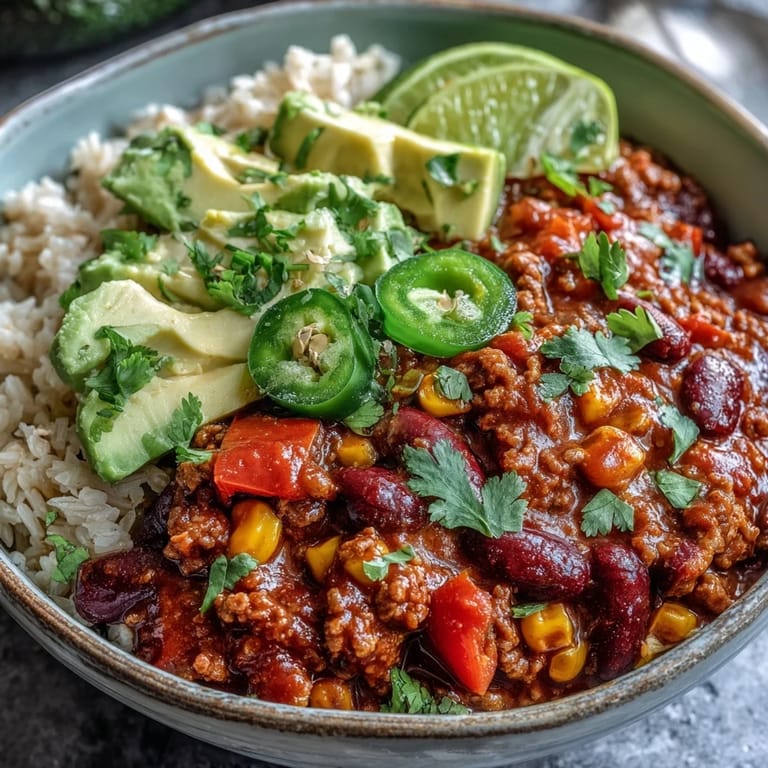
I spent years making this with white rice before trying brown rice, which added a subtle nuttiness I didn't know was missing. Quinoa brings protein and an almost floral note, while farro creates a chewier bite that transforms how the chili feels in your mouth. Some people swear by bulgur, others use barley, and they're all valid—the best choice is whichever grain you have on hand and actually want to eat.
Customization Without Losing Your Way
This recipe is forgiving enough to welcome changes without becoming unrecognizable—swap the beef for turkey to lighten it, use plant-based ground meat if that's your preference, or add extra beans to make it vegetarian. The foundational spice blend remains constant, which is what keeps everything tasting cohesive.
- Start with less cayenne unless you know you love heat, because you can always stir in more but removing it is impossible.
- Taste the chili ten minutes before serving so you can adjust salt and spices if needed rather than hoping it's right.
- Serve the toppings on the side so everyone controls their own flavor intensity and no one feels obligated to eat things they don't actually want.
 Pin it
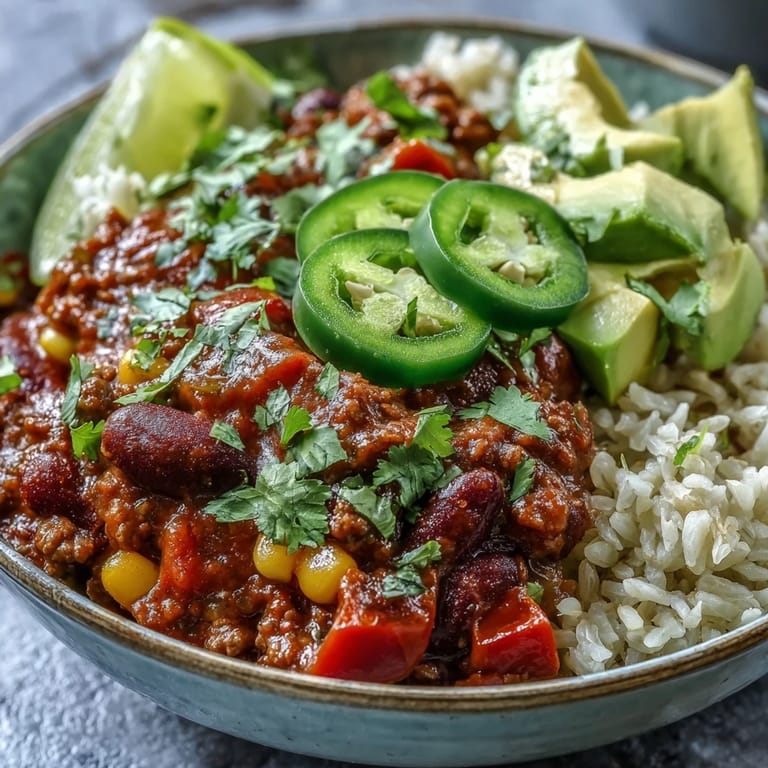
 This bowl of chili is your answer to the question of what's for dinner when nothing else feels quite right. It's warm, it's real, and it's exactly what you needed without knowing it.
Recipe FAQs
- → Can I make this vegetarian?
Yes, simply substitute plant-based ground meat or add extra beans for protein. The flavors and spices work perfectly with either option.
- → How spicy is this chili?
The base has mild to medium heat. Adjust spice level by varying the cayenne pepper and chili powder to your preference.
- → What grains work best?
White rice, brown rice, quinoa, farro, bulgur, or barley all work wonderfully. Choose based on your preference and cooking time.
- → Can I freeze leftovers?
Absolutely. The chili freezes well for up to 3 months. Store in airtight containers and thaw before reheating.
- → What toppings complement this best?
Shredded cheddar, sour cream, green onions, cilantro, avocado, jalapeños, and lime wedges add fresh contrast to the hearty base.
- → How long does this keep in the refrigerator?
Stored properly in sealed containers, the chili stays fresh for 4-5 days. The flavors often deepen and improve after sitting.