 Pin it
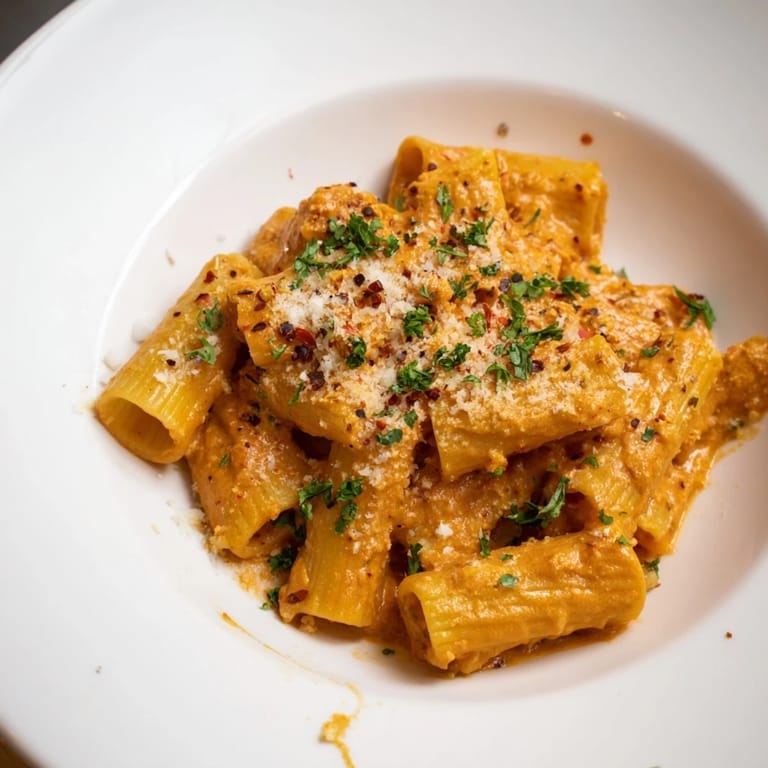
 I discovered this dish on a lazy Friday evening when I was scrolling through videos at my kitchen counter, half-watching content while waiting for water to boil. The moment I saw that creamy, coral-hued sauce coating those perfect tube-shaped pieces of pasta, I knew I had to drop everything and make it happen. There's something about a dish that promises sophistication but delivers in under forty minutes—no complicated techniques, just honest ingredients doing their job beautifully. That first bite, with the heat hitting right after the creaminess, felt like a small luxury I hadn't known I was craving.
I made this for my roommate on a night when she came home completely drained from work, and I watched her expression shift from exhausted to genuinely delighted when she took that first forkful. She kept saying it tasted expensive, which made me laugh because the whole thing cost less than takeout. That's the magic of it—it feels indulgent without requiring you to sell something to afford it. Now whenever she's had a rough day, she asks if we can make this, and I love that it's become our quick-fix comfort meal.
Ingredients
- Rigatoni (400 g): The sturdy tubes are essential here—they grip the sauce like they were designed for it, so don't swap for spaghetti or penne.
- Olive oil (2 tbsp): Use something you'd actually taste on bread, not the industrial stuff.
- Shallot (1 small, finely chopped): It dissolves into sweetness as it cooks, giving the sauce depth that raw garlic alone never could.
- Garlic (2 cloves, minced): Fresh is non-negotiable here—it needs to bloom in that hot oil.
- Red chili flakes (1 tsp): Start here and taste as you go; I've learned that spice levels are very personal, and you can always add more but never take it back.
- Tomato paste (60 ml): That little bit of caramelization is what transforms this from a simple sauce into something with backbone.
- Vodka (60 ml): The science part—it dissolves flavors that water can't reach, then burns off clean.
- Heavy cream (120 ml): This is where the luxe comes from; don't skimp or use half-and-half.
- Parmesan (60 g, grated): Freshly grated matters because pre-shredded versions have anti-caking agents that make the sauce grainy.
- Salt and black pepper: Taste at the end when everything's together.
- Butter (2 tbsp, unsalted): The final addition that makes it silk.
- Fresh parsley (2 tbsp, chopped): Purely honest—it's there for color and a whisper of freshness against all that richness.
Tired of Takeout? 🥡
Get 10 meals you can make faster than delivery arrives. Seriously.
One email. No spam. Unsubscribe anytime.
Instructions
- Get the pasta going:
- Fill a large pot with water, salt it generously so it tastes like the sea, and bring it to a rolling boil. Once the rigatoni goes in, set a timer and trust the package instructions, but fish out a piece a minute early to taste it—al dente is when it still has that tiny resistance when you bite it, not soft all the way through. Before you drain it, cup a measuring cup under the colander to catch that starchy pasta water; it's liquid gold for loosening the sauce later.
- Build the flavor base:
- Heat olive oil in a large skillet over medium heat until it shimmers, then add your finely chopped shallot. Let it sit and soften for a couple of minutes, stirring occasionally, until it goes translucent and starts to smell sweet. Toss in the minced garlic and chili flakes, stir quickly so nothing burns, and the whole kitchen will suddenly smell like an Italian grandmother's kitchen.
- Deepen the sauce:
- Stir in the tomato paste and let it sit on the heat for a couple of minutes, stirring occasionally. You're waiting for it to darken and smell less sharp, which is when you know the raw edge has cooked off. This step makes all the difference between a one-note tomato sauce and something that tastes layered and serious.
- Add the vodka:
- Pour the vodka into the skillet and stir to combine. You'll hear a little sizzle, and the kitchen will smell like a bar for exactly ten seconds. Simmer everything for a few minutes so the alcohol can cook off, leaving only the good flavors behind.
- Make it creamy:
- Lower the heat to medium-low and pour in the heavy cream, stirring constantly so it incorporates smoothly into the tomato mixture. The color will shift to this beautiful coral-pink, and it'll start smelling like the kind of pasta you'd order at a nice restaurant. Let it bubble very gently for a couple of minutes until it thickens slightly.
- Add the cheese:
- Sprinkle the grated Parmesan over the sauce and stir until it's completely melted and integrated. Taste it now and season with salt and black pepper—remember that Parmesan is salty, so go easy at first.
- Combine everything:
- Add your drained rigatoni to the skillet and toss it all together, making sure every piece gets coated. If the sauce clings too thickly, splash in some of that reserved pasta water, a little bit at a time, until it's creamy without being runny.
- Finish with butter and parsley:
- Stir in the butter until the sauce looks silky and shiny, then turn off the heat and scatter the fresh parsley over the top. Serve immediately in warm bowls while everything is still steaming.
 Pin it
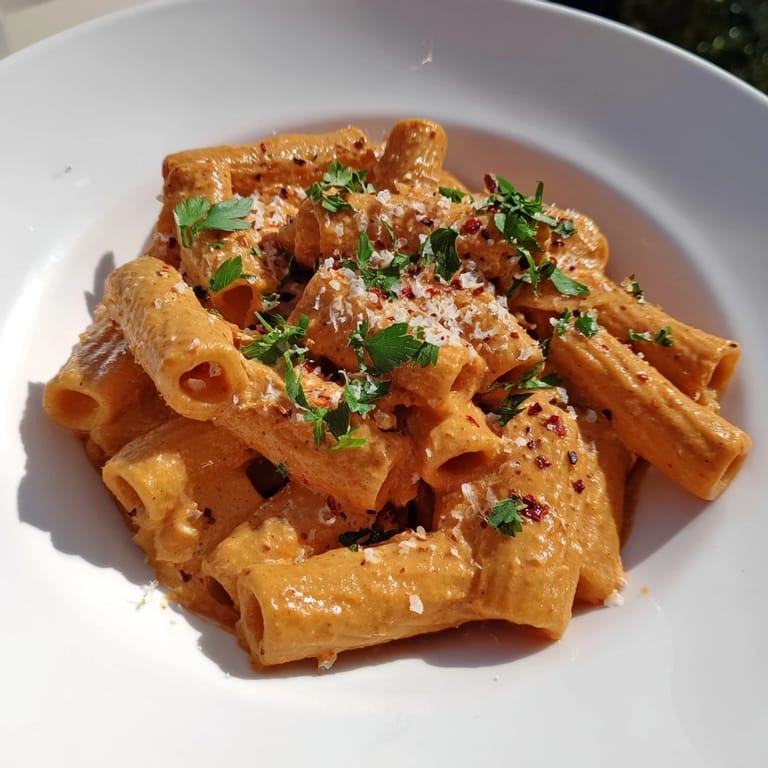
 There was a moment while eating this with friends when someone paused mid-bite and said this tastes like someone who actually cares made it, and I realized that's exactly what good food does—it stops people for a second. It's a reminder that you don't need a three-hour project to feed people something that feels thoughtful and worth their time.
The Vodka Secret
I was skeptical about the vodka at first—it seemed like one of those trendy TikTok moves that doesn't actually matter. But the moment I tasted the difference between a version with and without it, I understood. Vodka has a unique ability to dissolve and carry fat-soluble flavor compounds that water-based liquids can't reach, making the sauce taste more complex and rounded. The alcohol burns off completely, so you're left with pure flavor enhancement, not a boozy undertone. It's a small technical move that elevates the whole dish without anyone being able to point to it and say what makes it different—they just know it tastes good.
Customizing Your Heat Level
The one teaspoon of chili flakes in the base recipe is my sweet spot, but I've learned that spice is deeply personal—I once made this for someone who thought a quarter teaspoon was too much, and another friend who wanted nearly a tablespoon. Rather than arguing about what's right, I've started building the heat in stages: start with what the recipe says, taste it, and then hand over a small dish of extra flakes so everyone can adjust their bowl to their own preference. It takes the pressure off guessing, and honestly, it makes the whole meal feel more relaxed and enjoyable.
Making It Vegan or Adding Vegetables
Plant-based cream exists now and works surprisingly well in this sauce—use the same amount and follow the same technique, just avoid letting it boil aggressively. For cheese, there are some really solid vegan Parmesan blends that melt and taste better than they did even two years ago, so it's genuinely worth experimenting if you're cooking for mixed dietary needs. I've also thrown in sautéed mushrooms, fresh spinach stirred in at the end, or roasted cherry tomatoes, and they all feel natural in the richness without stealing the spotlight.
- For vegetables, sauté them separately first or add sturdy ones early so they have time to soften.
- If you add spinach, do it right at the end off heat so it stays bright and doesn't turn into mush.
- Mushrooms are your best friend here—they add umami and feel substantial enough that the dish doesn't miss any richness.
 Pin it
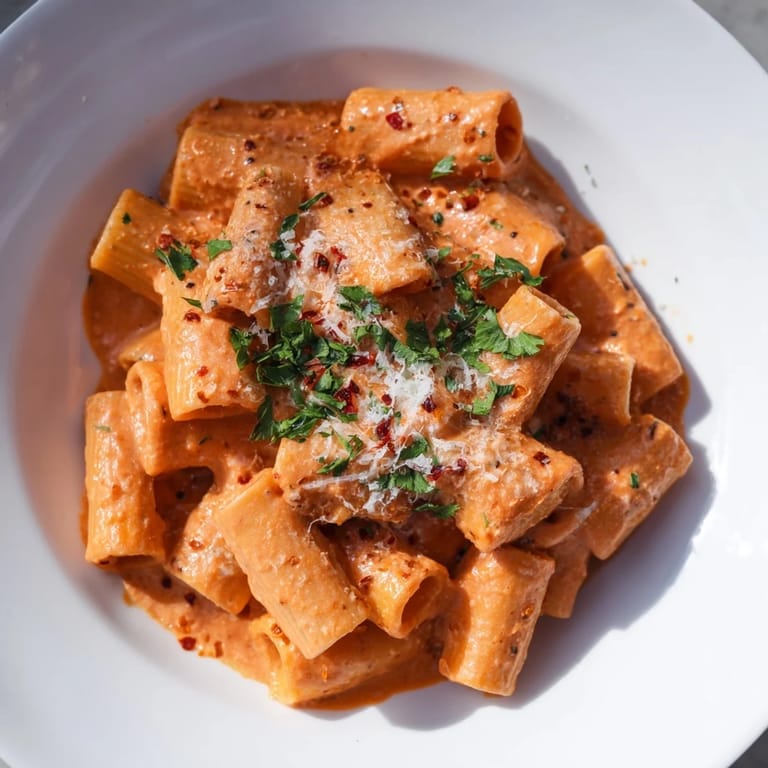
 This pasta has become my go-to when I want to feed people something that feels both indulgent and effortless. It's proof that you don't need complicated techniques or a long list of obscure ingredients to make something genuinely delicious.
Recipe FAQs
- → How do I adjust the spiciness of the sauce?
Modify the amount of red chili flakes according to your preferred heat level. Start with less and add more gradually to suit your taste.
- → Can I substitute the heavy cream for a dairy-free option?
Yes, plant-based creams like cashew or coconut cream work well as substitutes, maintaining the sauce’s creamy texture.
- → What is the purpose of vodka in the sauce?
Vodka helps to release and blend the flavors in the tomato paste, adding depth while evaporating during cooking for a smooth finish.
- → How do I prevent the sauce from being too thick?
Reserve some pasta cooking water and add it gradually to the sauce when mixing with pasta until desired consistency is reached.
- → Can I add vegetables to enhance this dish?
Adding sautéed mushrooms or spinach can complement the sauce well and provide additional textures and nutrition.