 Pin it
 The first time I deep-fried falafel at home, my kitchen filled with such an irresistible aroma that my neighbor actually knocked on the door to ask what was happening. I'd been intimidated by the process—worried the mixture would fall apart or the oil would splatter—but once I tasted that golden, crispy exterior giving way to a warm, herby center, I understood why this dish has been perfected over centuries across the Middle East. Now I make falafel pita pockets whenever I need comfort food that feels both exciting and familiar.
Years ago, I brought falafel pita pockets to a potluck thinking they'd be a side dish nobody would touch. Instead, I watched people come back for thirds, their fingers sticky with tahini sauce, asking for the recipe before they'd even finished eating. That moment taught me that good food doesn't need to be complicated—it just needs to be made with care and served warm.
Ingredients
- Dried chickpeas (1 ½ cups, soaked overnight): Using dried chickpeas instead of canned is the secret to falafel that's light and fluffy rather than dense; canned versions are too wet and will fall apart.
- Fresh parsley and cilantro (½ cup each): These herbs aren't optional—they're what make falafel taste alive and bright, so don't skimp or substitute dried.
- Ground cumin and coriander (1 tsp each): These warm spices are the backbone of authentic flavor; toast them in a dry pan first if you have time for even deeper warmth.
- Baking powder (½ tsp): This tiny amount is magic—it keeps the falafel from being heavy and gives it that perfect crispy-outside, fluffy-inside texture.
- Tahini (½ cup): The creamy sauce that ties everything together; buy the best quality you can find since it's so prominent in flavor.
- Pita bread: Warm it gently in a dry skillet or wrapped in foil in the oven so it stays soft and pliable for pocketing.
Tired of Takeout? 🥡
Get 10 meals you can make faster than delivery arrives. Seriously.
One email. No spam. Unsubscribe anytime.
Instructions
- Pulse the mixture into coarse crumbs:
- Drain your soaked chickpeas until they're completely dry, then pulse everything together in the food processor—you want it to feel like wet sand that holds together when you squeeze it, not a smooth paste. If it gets too fine, the falafel will be dense and heavy.
- Chill the mixture (optional but recommended):
- Refrigerating for even 20 minutes makes the mixture easier to handle and helps the flavors meld. I've skipped this step in a rush and the results were still good, but the texture is noticeably better when you wait.
- Heat oil to the right temperature:
- Use a thermometer if you have one—350°F is the sweet spot where falafel gets golden and crispy without absorbing too much oil or burning on the outside before cooking through. A wooden spoon handle dipped in the oil should bubble gently, not violently.
- Form and fry in batches:
- Wet hands or a falafel scoop keep the mixture from sticking; work quickly and fry only 3-4 pieces at a time so they have room to brown evenly. They only need 2-3 minutes per side, and you'll know they're done when they're deep golden and sound crispy when you tap them.
- Whisk tahini sauce until silky:
- Start with less water than you think you need, whisking constantly so the tahini emulsifies smoothly. Adding water a tablespoon at a time prevents it from becoming thin and separated, and you're looking for the consistency of pourable yogurt.
- Assemble right before serving:
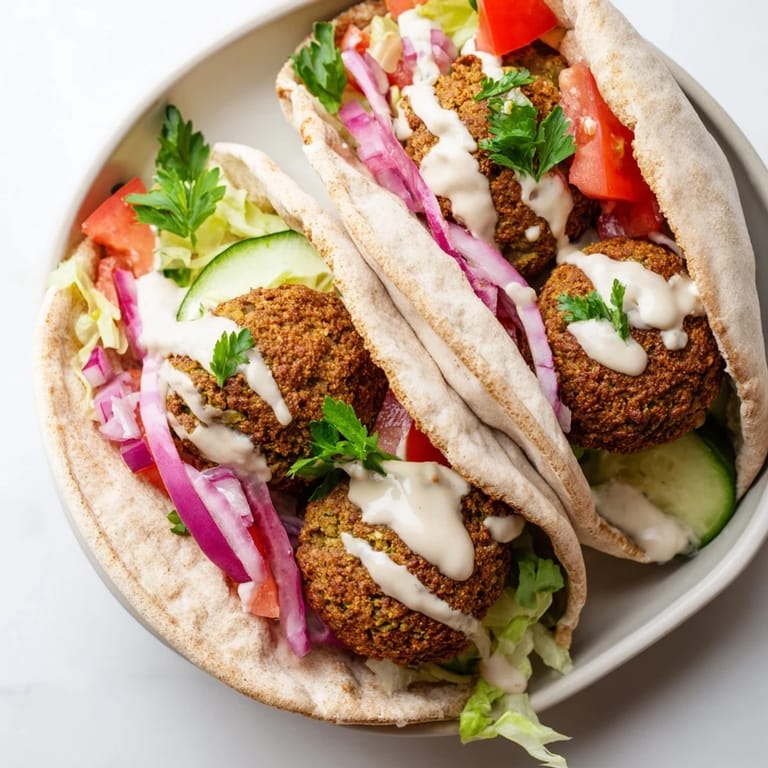
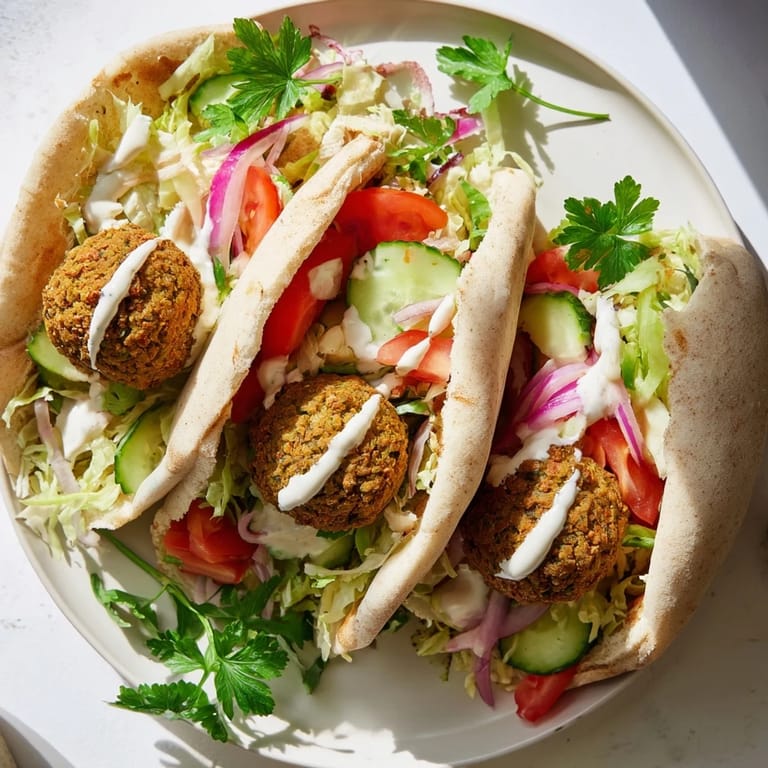
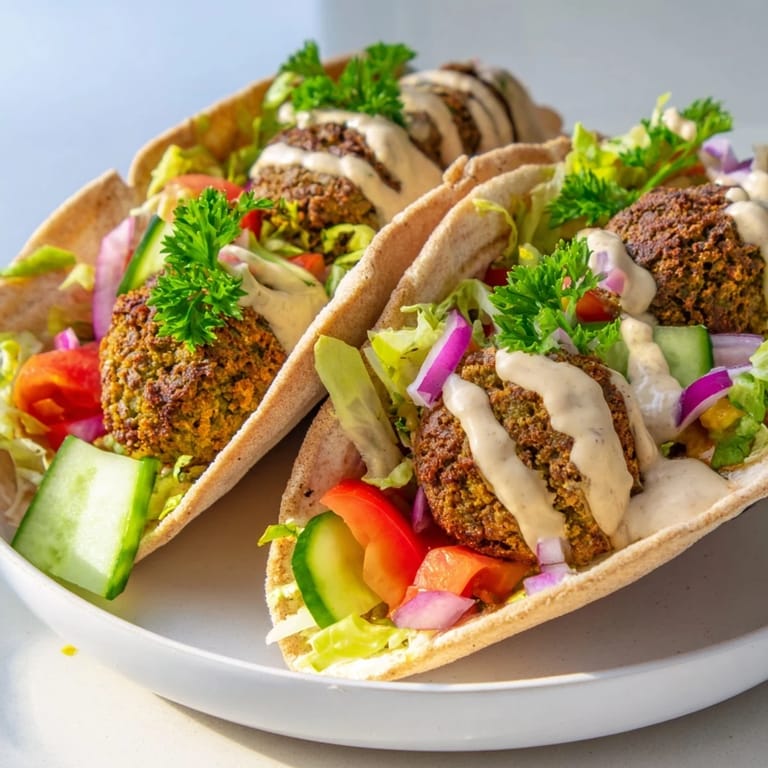
- Warm pita pockets filled with cool, crisp vegetables and hot falafel create a beautiful temperature and texture contrast. Drizzle the tahini sauce over everything and it all comes together in the best possible way.
 Pin it
 There's something almost meditative about watching falafel bob and turn golden in hot oil, knowing that in just a few minutes it'll be transformed into something crispy and wonderful. Those moments in the kitchen, the quiet focus before serving something you made with your own hands, remind me why cooking matters—it's not just about feeding people, it's about creating a moment worth sharing.
Why This Dish Works
Falafel pita pockets hit every note you want in a meal: the falafel itself is protein-packed and satisfying, the fresh vegetables add brightness and crunch, and the tahini sauce brings everything together with its nutty, creamy richness. The combination of warm and cool, crispy and soft, herbaceous and smooth is what makes this dish so endlessly craveable. It's the kind of food that works equally well as a quick lunch, casual dinner, or something to impress friends with.
Storage and Make-Ahead Tips
You can make the falafel mixture a full day ahead and store it covered in the fridge, which actually improves the flavor and makes it even easier to work with. Cooked falafel keeps well in an airtight container for 3-4 days and reheats beautifully in a 350°F oven for about 10 minutes. The tahini sauce also keeps for several days refrigerated, though you might need to whisk in a bit more water before serving since it can thicken as it sits.
Variations and Serving Ideas
While the classic combination is hard to beat, I've learned that falafel pita pockets are wonderfully flexible. Try adding pickled turnips or radishes for a sour, crunchy element that cuts through the richness, or experiment with different fresh herbs like mint or dill if that's what you have on hand. You can also bake the falafel instead of frying for a lighter version—it takes about 20-25 minutes at 400°F and won't be quite as crispy on the outside, but it's still delicious and requires less oil.
- Serve alongside a simple fattoush salad with sumac and pita chips for a complete meal.
- Make a falafel wrap instead by using a large flatbread or tortilla and adding hummus as an extra layer of creamy richness.
- Crumble leftover falafel over a salad or grain bowl for an easy next-day lunch that feels completely different.
 Pin it
 Making falafel at home transformed the way I think about this dish—it's not some complicated restaurant secret, just good ingredients treated with respect. Every time I fold one of these warm pita pockets and hand it over, I'm sharing something that tastes like care.
Recipe FAQs
- → How do you achieve crispy falafel texture?
Soaking chickpeas overnight and lightly processing them helps retain texture. Frying in hot oil at about 350°F until golden brown ensures a crispy exterior.
- → Can falafel be baked instead of fried?
Yes, baking at 400°F for 20–25 minutes, turning halfway, offers a lighter alternative with a slightly less crispy texture.
- → What ingredients enhance the falafel flavor?
Fresh parsley, cilantro, cumin, coriander, and optional cayenne add herbal and warm spice notes essential to falafel.
- → How is the tahini sauce prepared?
Whisk tahini with lemon juice, minced garlic, and salt, then gradually add cold water to reach a smooth, pourable consistency.
- → What vegetables complement the falafel pita?
Shredded lettuce, diced tomatoes, cucumber, and red onion provide fresh crunch and balance to the rich falafel and sauce.