 Pin it
 My mother used to make pot roast on Sundays when the house was cold and we needed something that would fill every corner with warmth. I never thought I could do it justice until one winter afternoon when I had a too-large roast and too much time on my hands. The smell that came from the oven that day brought my neighbor to the door asking what I was cooking. Now it's the dish I make when I want the house to feel like home.
I made this for a dinner party once and forgot to check the time. When I finally opened the oven an hour late, I panicked, but the beef was perfect, just more tender than I planned. Everyone asked for seconds. That night taught me that pot roast is forgiving, and sometimes the best meals happen when you stop worrying so much.
Ingredients
- Boneless beef chuck roast (3 to 4 lb): This cut has enough fat and connective tissue to break down into something incredibly tender after slow roasting.
- Kosher salt and black pepper: Season generously because the beef needs it, and don't be shy with the pepper.
- Carrots, parsnips, onions, potatoes, celery: These roots become sweet and soft as they cook, and they soak up the beefy juices like little flavor sponges.
- Garlic cloves: Smash them with the side of your knife so they release their oils into the pot.
- Tomato paste: A small amount adds depth and richness without making it taste like tomato.
- Beef broth and red wine: The wine is optional, but it adds a layer of complexity that makes the sauce taste like you worked harder than you did.
- Worcestershire sauce: This brings a subtle tang and umami that ties everything together.
- Fresh thyme, rosemary, bay leaves: Use fresh herbs if you can, the flavor is noticeably better and they perfume the whole dish.
- Olive oil: For searing the beef and getting that golden crust that becomes the foundation of flavor.
Tired of Takeout? 🥡
Get 10 meals you can make faster than delivery arrives. Seriously.
One email. No spam. Unsubscribe anytime.
Instructions
- Preheat and prep the beef:
- Set your oven to 300°F and pat the roast completely dry with paper towels. Season every side with salt and pepper, pressing it in gently so it sticks.
- Sear the beef:
- Heat the olive oil in your Dutch oven over medium-high heat until it shimmers. Lay the beef in carefully and let it sit undisturbed for 3 to 4 minutes per side until it turns deep brown and crusty.
- Cook the vegetables:
- Remove the beef and add all your chopped vegetables to the pot. Stir them around for about 5 minutes until they start to soften and pick up the browned bits from the bottom.
- Add garlic and tomato paste:
- Toss in the smashed garlic and tomato paste, stirring for just a minute until everything smells fragrant and the paste darkens slightly.
- Deglaze with wine:
- Pour in the red wine and scrape up all those stuck-on bits with a wooden spoon. Let it bubble for 2 minutes to cook off some of the alcohol.
- Build the braising liquid:
- Nestle the beef back into the pot and pour in the broth and Worcestershire sauce. Tuck the thyme, rosemary, and bay leaves around the meat so the liquid comes about halfway up the sides of the roast.
- Roast low and slow:
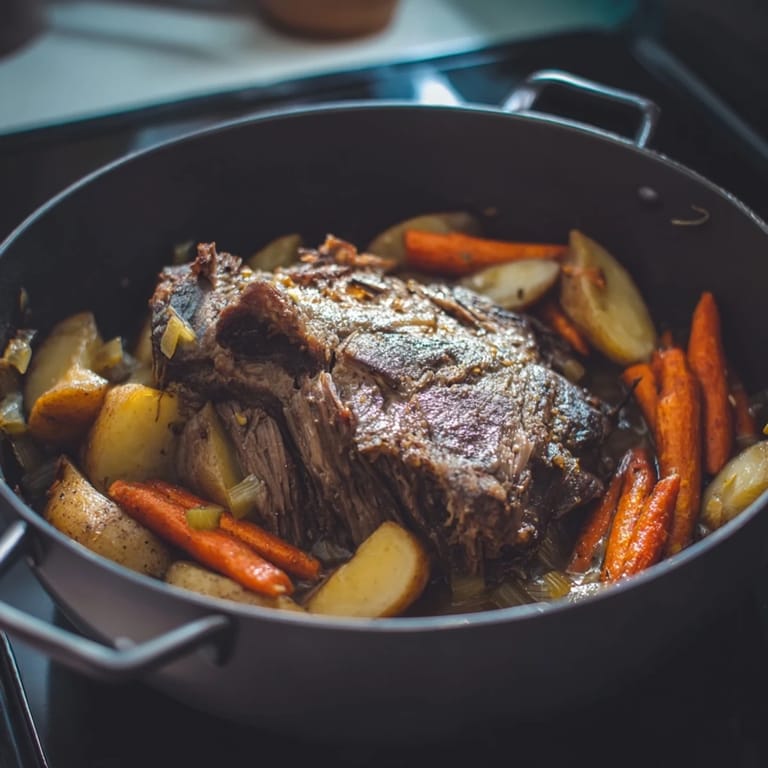
- Bring everything to a gentle simmer, cover tightly with the lid, and slide it into the oven. Let it roast for 3 to 3 and a half hours until the beef is fork-tender and the vegetables are soft.
- Rest and serve:
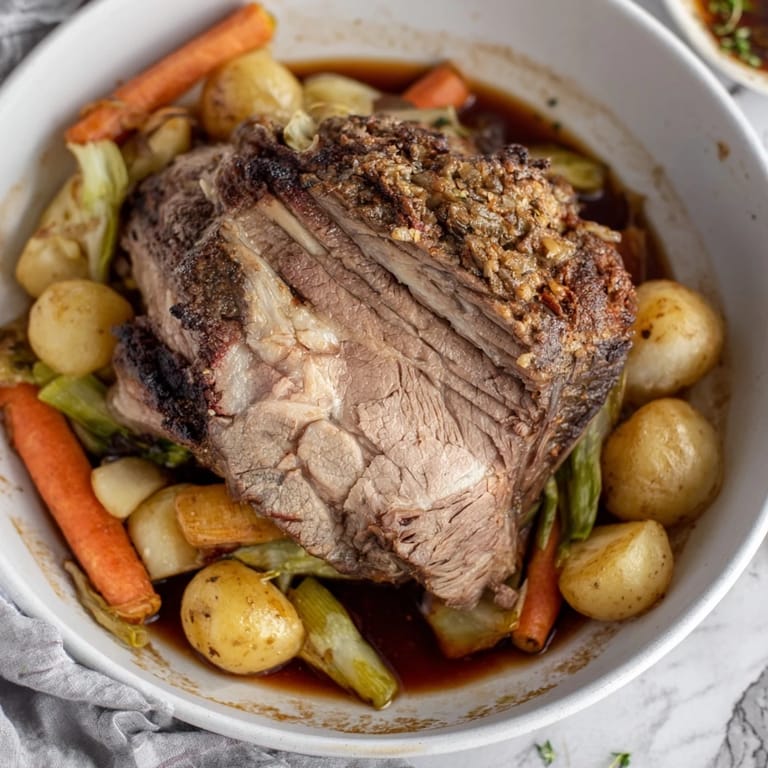
- Pull out the pot, fish out the herb stems and bay leaves, and let the beef rest for 10 minutes. Slice or shred it, then serve with the vegetables and all those beautiful pan juices spooned over the top.
 Pin it
 There was a night when my friend showed up unannounced, stressed and exhausted from work. I pulled the pot roast from the oven, set a bowl in front of her, and watched her shoulders drop as she took the first bite. She didn't say much, just ate slowly and smiled. That's when I realized this dish isn't just food, it's comfort you can serve on a plate.
Making the Sauce Thicker
If you want a richer, thicker sauce, pull the beef and vegetables out at the end and set them aside. Put the pot back on the stove over medium heat and let the juices simmer until they reduce by half. You can also whisk together a tablespoon of cornstarch with two tablespoons of cold water and stir it in, letting it bubble for a minute until it thickens.
Ingredient Swaps and Variations
If you can't find parsnips, use turnips or just add more carrots and potatoes. You can skip the wine entirely and use all beef broth, it will still taste wonderful. I've also made this with pearl onions instead of wedges, and they become sweet little bites that everyone fights over.
Storing and Using Leftovers
Pot roast keeps beautifully in the fridge for up to four days, and it honestly tastes better the next day when the flavors have had time to settle. I like to shred the leftover beef and pile it onto crusty bread with some of the juice for a sandwich that's better than anything you could buy. You can also turn it into stew by adding more broth and simmering it with fresh vegetables.
- Let the pot roast cool completely before transferring it to an airtight container.
- Reheat gently on the stove or in the oven so the beef stays tender.
- Freeze portions in individual containers for easy weeknight dinners up to three months.
 Pin it
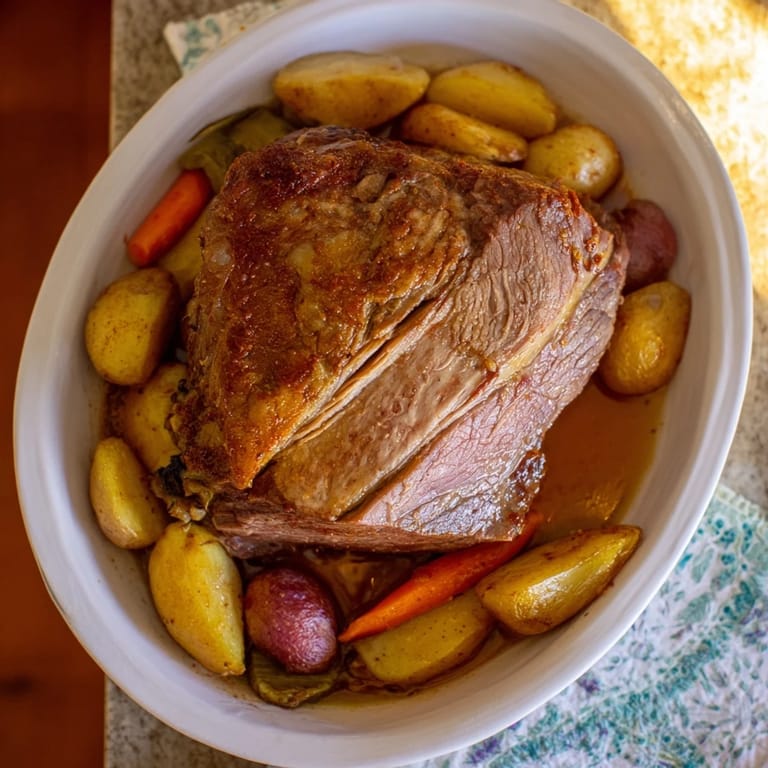
 This pot roast has become my go-to when I want to feed people I care about without spending the whole day in the kitchen. It's simple, reliable, and always makes the house smell like love.
Recipe FAQs
- → What cut of beef works best for slow roasting?
Boneless beef chuck roast is ideal due to its marbling and connective tissue that break down during slow cooking, making it tender and flavorful.
- → Can I omit red wine in the braising liquid?
Yes, substituting with more beef broth works well and maintains the rich, savory base for the slow cooking process.
- → How do I ensure the vegetables don’t become mushy?
Cut vegetables into large chunks and add them early enough to become tender but not falling apart during the 3 to 3½ hour roasting.
- → Is resting the beef after cooking necessary?
Resting the meat for about 10 minutes allows the juices to redistribute, resulting in moist, tender slices when served.
- → How can I thicken the pan juices for serving?
After removing meat and vegetables, simmer the cooking juices on the stove and reduce by half or stir in a cornstarch slurry to thicken the sauce.